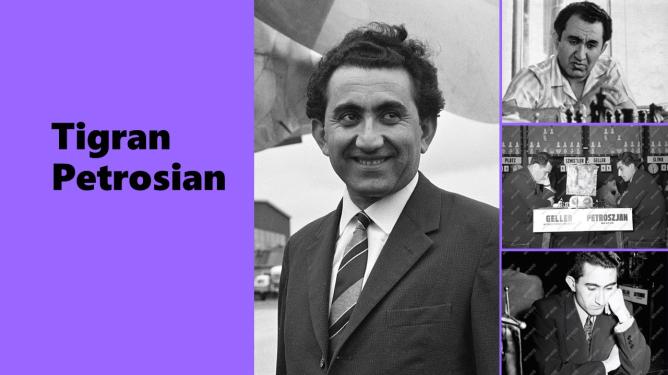
In the shadow of Mount Ararat and the ancient streets of Tbilisi, a young boy orphaned by hardship swept the roads during the chaos of World War II to help his family survive. Tigran Vartanovich Petrosian, born on June 17, 1929, in Tbilisi, Georgian SSR (now Georgia), into an Armenian family, rose from modest beginnings to become the ninth official World Chess Champion. He held the title from 1963 to 1969, successfully defending it once in a era dominated by Soviet giants. Nicknamed “Iron Tigran” for his nearly impenetrable defensive style, Petrosian emphasized safety, prophylaxis (preventing the opponent’s plans before they arose), and gradual positional squeezing rather than flashy attacks. He was a master of subtle maneuvering, deep strategic understanding, and timely tactical blows when the moment demanded. While many champions dazzled with sacrifices or iron logic, Petrosian made chess look like a patient siege—fortifying his own position while slowly eroding his opponent’s. He lost remarkably few games in his prime, famously going undefeated in an entire tournament in 1962. Beyond the board, he was a quiet, philosophical man who studied philosophy in postgraduate work and contributed to chess literature. His life bridged personal resilience with chess immortality, proving that unbreakable defense could conquer even the most aggressive attackers.
Petrosian’s early life was marked by struggle. His family faced poverty, and during the war he worked as a street sweeper while teaching himself chess from books. He learned the game around age eight and showed rapid talent. By 1945, at sixteen, he won the Georgian Championship. In 1946, he dominated the USSR Junior Championship. He moved to Yerevan and later Moscow, studying at the Yerevan Teachers’ College and pursuing postgraduate philosophy. Chess, however, became his true vocation. In 1951, he shared first in the Moscow Championship. He earned the International Master title that year and the Grandmaster title in 1952 after a strong performance in the Stockholm Interzonal.
The 1950s saw Petrosian establish himself among the world elite. He qualified for multiple Candidates tournaments (1953, 1956, 1959), consistently placing high but not yet breaking through. His big moment came in 1962 at the Curaçao Candidates tournament. In a star-studded field, Petrosian went undefeated, winning the event and earning the right to challenge Mikhail Botvinnik for the world title. Critics noted the many draws among Soviet players, leading to controversy and eventual format changes by FIDE, but Petrosian’s solid play was undeniable.
The 1963 World Championship match in Moscow against the veteran Botvinnik was a clash of styles: the scientific engineer versus the iron defender. Petrosian played with extraordinary patience, neutralizing Botvinnik’s preparations and gradually outmaneuvering him. After 22 games, the score stood at 12½–9½ in Petrosian’s favor (+5 -2 =15). On May 20, 1963, at age 33, Tigran Petrosian became the ninth World Champion—the first Armenian to claim the title. The Soviet chess community celebrated, and Armenia took special pride in their native son.
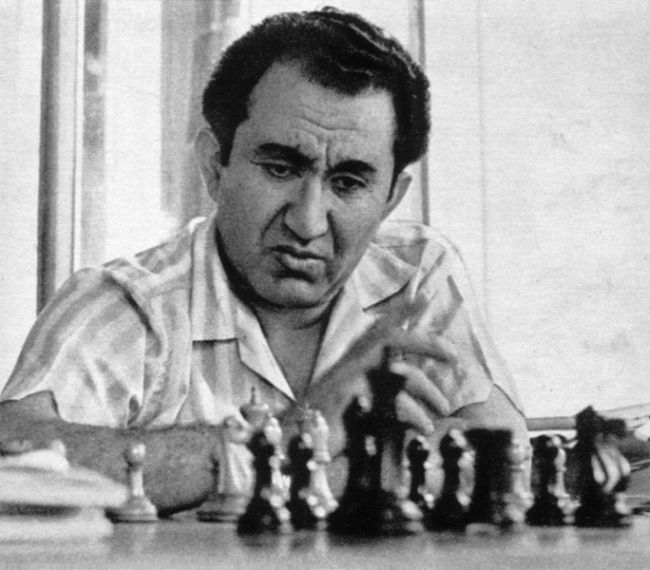
As champion, Petrosian remained active and successful in tournaments. He shared first at the 1963 Piatigorsky Cup in Los Angeles with Paul Keres. His defensive mastery shone brightly; opponents found it almost impossible to break through his fortifications. In 1966, he faced a strong challenge from the rising Boris Spassky in Moscow. The match was tense and closely fought over 24 games. Petrosian took an early lead, Spassky fought back, but the champion’s resilience prevailed. Petrosian won 12½–11½ (+4 -3 =17), successfully defending his title—the first time a champion had won a title match since Alekhine in 1934. This victory cemented his reputation as one of the hardest players to beat in chess history.
Petrosian continued tournament triumphs, including sharing the 1969 Soviet Championship. However, the 1969 rematch with Spassky in Moscow proved more difficult. Spassky, better prepared and playing with greater dynamism, took the lead and maintained pressure. Petrosian fought valiantly but ultimately lost 10½–12½. At age 40, he relinquished the crown after six years. The match highlighted the evolution of styles—Petrosian’s deep prophylaxis meeting Spassky’s universal approach.
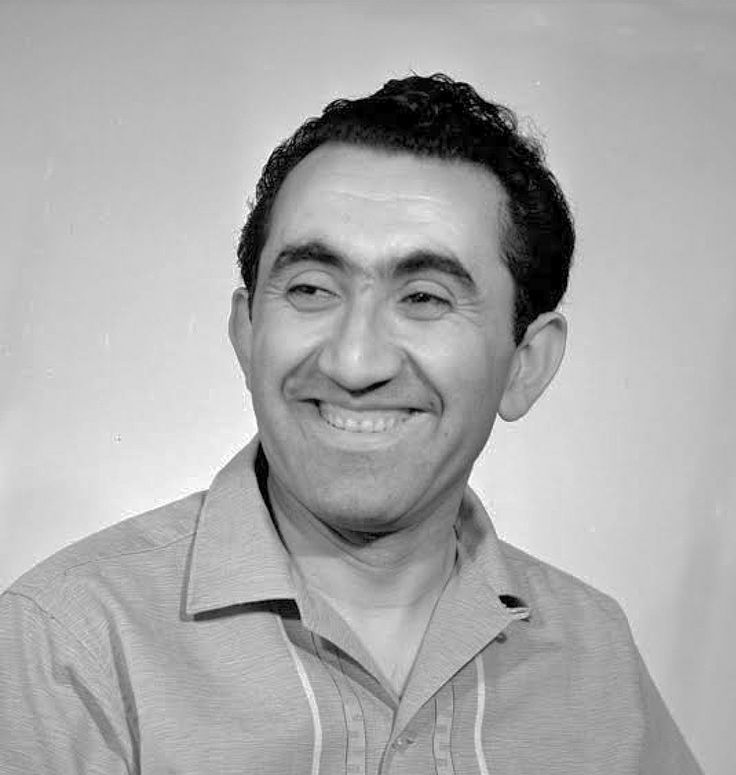
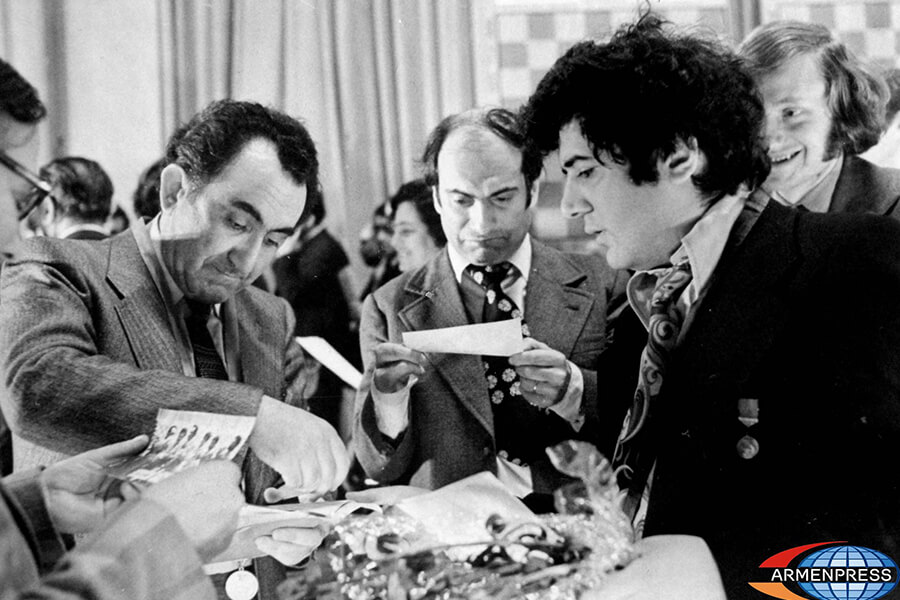
Even after losing the title, Petrosian stayed competitive at the highest level. He won the Soviet Championship again in 1975 (his fourth title overall: 1959, 1961, 1969 shared, 1975). He reached the Candidates semifinals in 1971 (losing to Bobby Fischer) and qualified for later cycles in 1974, 1977, and 1980. He participated in ten Chess Olympiads from 1958 to 1978, contributing to nine team gold medals with an outstanding personal record (+78 =50 –1), the single loss coming late in his career. He also excelled in European Team Championships. Later tournament wins included Biel 1976, Lone Pine 1976, and strong showings into the early 1980s, such as second at Tilburg 1981.
Petrosian’s style revolutionized positional play. He pioneered the positional exchange sacrifice—giving up material not for immediate attack but for long-term strategic gains, such as control of key squares or weakened pawn structures. Openings named after him include the Petrosian Variation of the King’s Indian Defense and the Petrosian System in the Queen’s Indian. Bobby Fischer praised his “incredible tactical view” and sense of danger, noting that Petrosian could “smell” threats far in advance. Boris Spassky observed that opponents never knew when Petrosian might suddenly switch to Tal-like tactics. His games often featured long, maneuvering battles where he slowly improved his position while restricting the opponent.
Off the board, Petrosian was known for his modesty and intellectual interests. He wrote chess articles and books, sharing his deep insights into strategy. He suffered from hearing issues later in life and sometimes used a hearing aid during tournaments. Despite health challenges, he remained active in chess organization and commentary in the Soviet Union.
Tigran Petrosian died on August 13, 1984, in Moscow at the age of 55 from stomach cancer. The chess world mourned the loss of one of its greatest defensive geniuses. He was buried in Moscow, and his legacy continues to inspire players who study his games for lessons in patience, prophylaxis, and positional mastery.
Petrosian’s influence endures. He proved that defense is not passive but a profound art requiring foresight and iron nerves. Modern grandmasters still analyze his exchange sacrifices and prophylactic moves, many of which engines later confirm as optimal. From the streets of wartime Tbilisi to the pinnacle of world chess, “Iron Tigran” embodied resilience—both on and off the board. He didn’t overwhelm opponents with brilliance in a single blow; he outlasted and outthought them, turning potential weaknesses into unbreakable strength. In the pantheon of champions, Petrosian stands as the ultimate master of safety and subtle dominance.