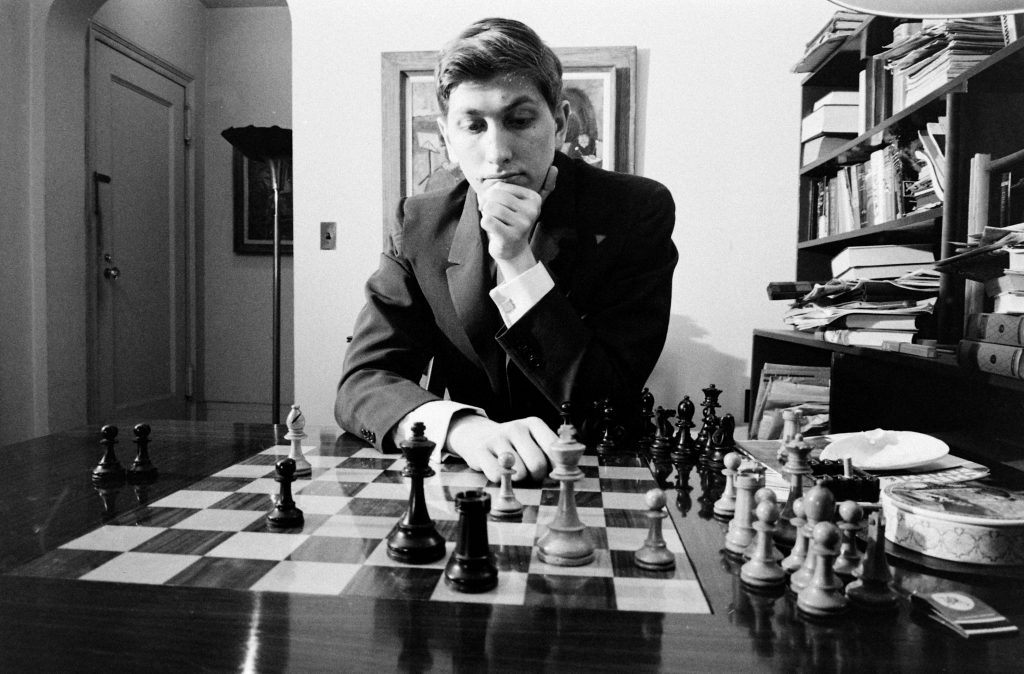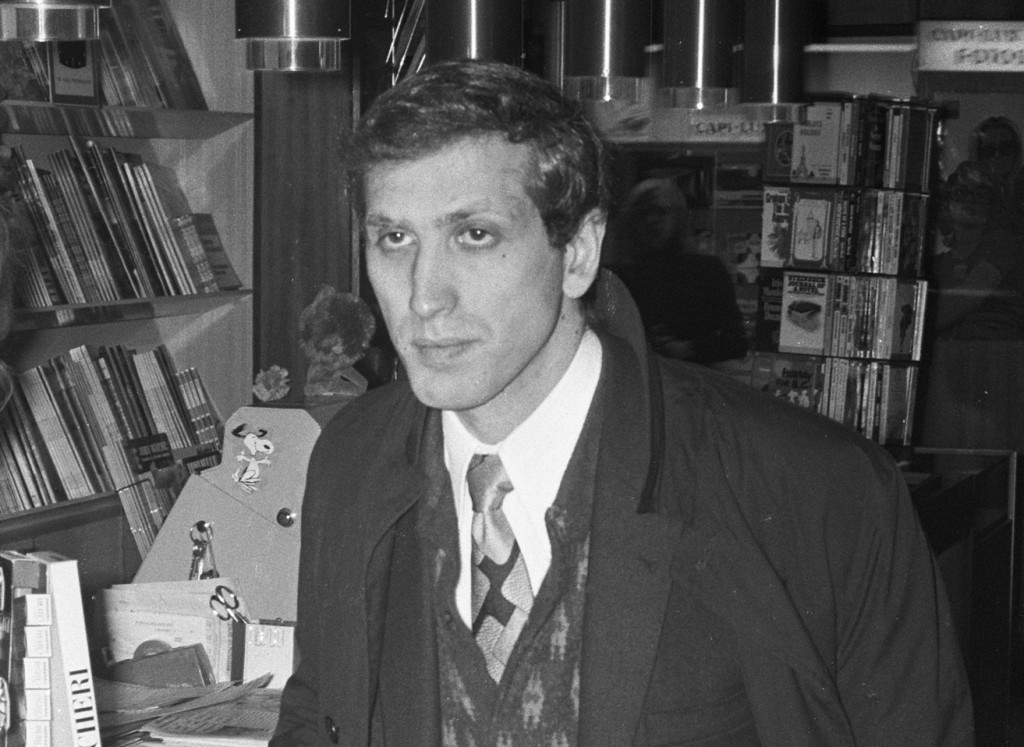
In a modest apartment in Brooklyn, New York, a six-year-old boy received a cheap plastic chess set as a gift from his sister and quickly became obsessed. Robert James "Bobby" Fischer, born on March 9, 1943, in Chicago, Illinois, but raised in Brooklyn after his family moved, would grow into the most famous and controversial chess player of the 20th century. The eleventh official World Chess Champion, he held the title from 1972 to 1975—the first and only native-born American to achieve this feat. Fischer was a chess revolutionary: his obsessive preparation, deep opening innovations, and near-perfect technique shattered the Soviet monopoly on the world title. His style combined ferocious calculation, psychological intensity, and a demand for perfection that made him almost unbeatable in his prime. He produced the legendary “Game of the Century” at thirteen and achieved a 20-game winning streak in Candidates matches that remains unmatched. The 1972 “Match of the Century” against Boris Spassky in Reykjavik turned chess into a global spectacle and a symbolic Cold War victory for the West. Yet Fischer’s story is also one of brilliance shadowed by paranoia, controversy, and self-imposed exile. He walked away from the title in 1975 rather than defend it under FIDE’s conditions, vanishing from competitive chess for nearly two decades. His life ended in isolation, but his impact on the game—elevating its popularity, professional standards, and analytical depth—remains unmatched.
Fischer’s early life was unconventional. His mother, Regina Wender, was a Swiss-born Jewish intellectual and teacher; his father, a German-born physicist, left the family early. Bobby taught himself to read at an early age and showed prodigious analytical talent. He joined the Brooklyn Chess Club and the Manhattan Chess Club, where he devoured books and played endlessly. In 1956, at thirteen, he stunned the world with his victory over Donald Byrne in the Rosenwald Tournament—sacrificing his queen for a devastating attack in what became known as the “Game of the Century.” That same year he won the U.S. Junior Championship. In 1957, at fourteen, he became the youngest U.S. Champion ever, a title he would win eight times. In 1958, at fifteen, he earned the Grandmaster title after a strong performance at the Portorož Interzonal—the youngest GM in history at the time.
Fischer’s ascent through the world championship cycle was dramatic. He struggled in early Candidates events but exploded in 1970–71. In the 1971 Candidates matches, he demolished Mark Taimanov 6–0, Bent Larsen 6–0, and then defeated Tigran Petrosian 6½–2½ after an initial loss. This included a record 20 consecutive wins against top grandmasters—a streak that still stands as one of the most dominant runs in chess history. His preparation was revolutionary: he studied openings with unprecedented depth, often playing rare or revived lines to catch opponents off guard. He demanded the best conditions for tournaments and matches, clashing frequently with organizers.
The 1972 World Championship match against defending champion Boris Spassky in Reykjavik, Iceland, became a global phenomenon. Amid Cold War tensions, the match was billed as a battle between East and West. Fischer started poorly, losing the first game and forfeiting the second over disputes about cameras and conditions. Trailing 0–2, many feared he might quit. Then he won Game 3 with Black in a sharp Sicilian, turning the momentum. He took the lead and never relinquished it. The final score was 12½–8½ (+7 -3 =11, including the forfeit). On September 1, 1972, Bobby Fischer became the eleventh World Chess Champion—the first American-born player to hold the title and the first non-Soviet champion since 1948. The victory made him an instant American hero and dramatically boosted chess’s popularity worldwide. Spassky himself showed sportsmanship, giving Fischer a standing ovation after one of his wins.
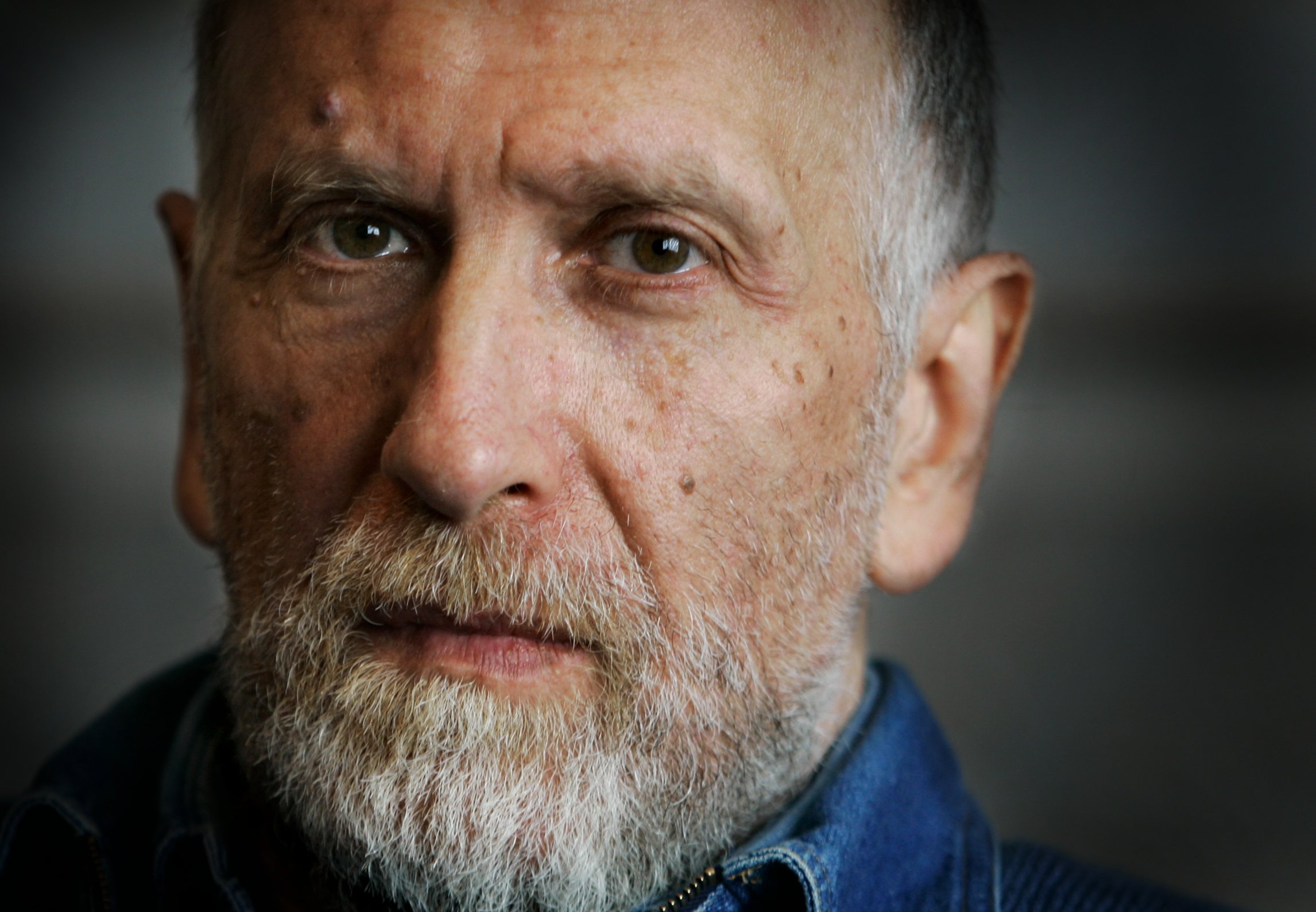
As champion, Fischer’s peak rating reached 2785 (July 1972), the highest in the world at the time. He continued to dominate tournaments when he played, but disputes with FIDE grew. For the 1975 defense against Anatoly Karpov, Fischer demanded changes to the match format (first to ten wins, with the champion retaining the title at 9–9). When FIDE refused to meet all his conditions, Fischer forfeited the title on April 3, 1975. He never played another official FIDE-rated game for the world championship. Many consider this one of the great “what if” moments in chess history.
Fischer largely withdrew from public chess after 1972, living reclusively in various places. He resurfaced in 1992 for a controversial $5 million rematch against Spassky in Yugoslavia (then under UN sanctions). Fischer won again (+10 -5 =15), but the event led to U.S. legal troubles, including an arrest warrant. He spent years in self-imposed exile, living in Hungary, the Philippines, Japan, and elsewhere. In 2004–2005, he was detained in Japan for passport issues and faced deportation to the U.S. Iceland granted him citizenship in 2005, allowing him to settle there—ironic, given his 1972 triumph in Reykjavik.
In his later years, Fischer made inflammatory public statements, including anti-Semitic and anti-American remarks that alienated many former admirers. He lived quietly in Iceland with his partner Miyoko Watai (a Japanese chess official whom he married in 2004). Despite the controversies, he continued analyzing chess privately and occasionally commented on the game.
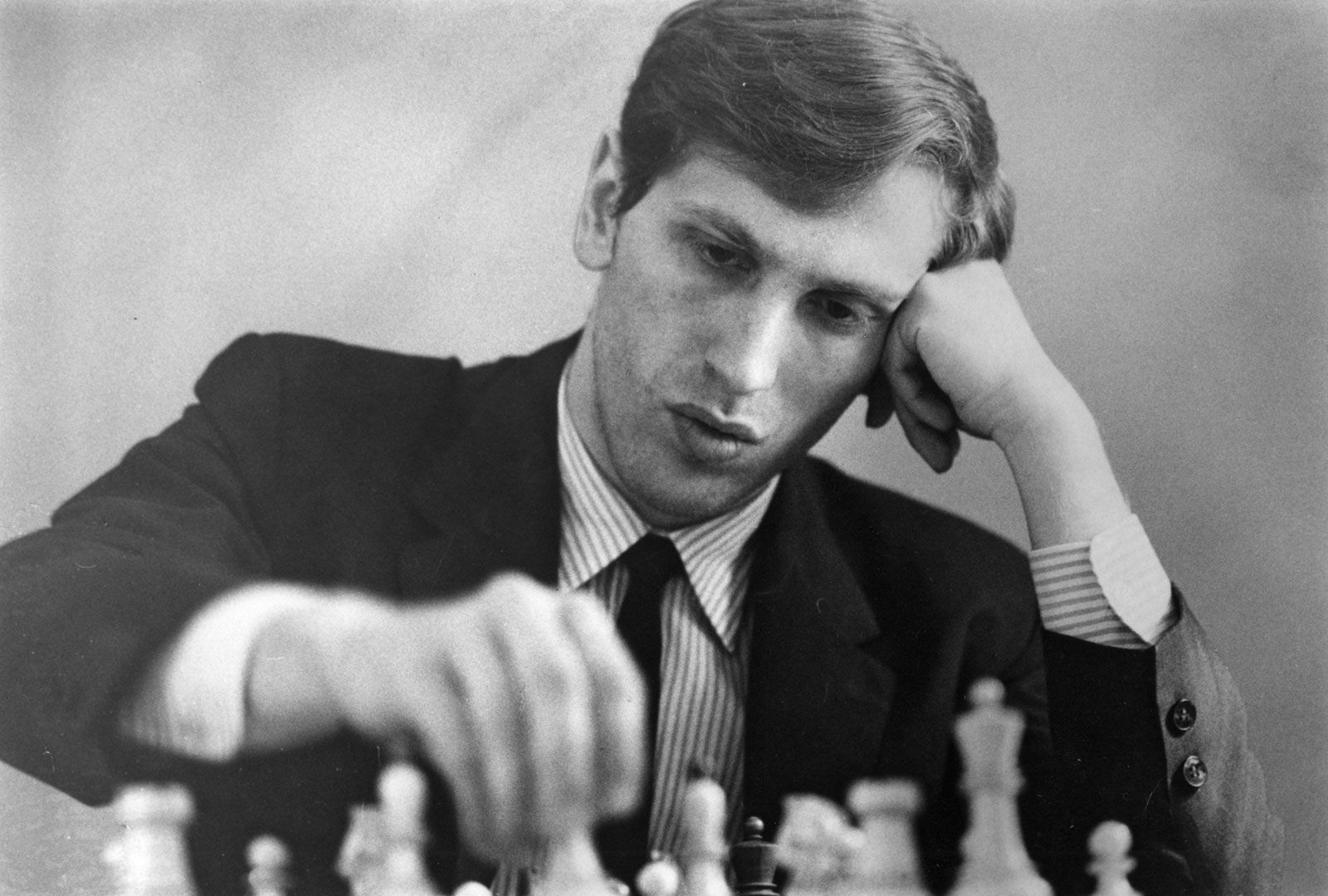
Bobby Fischer died on January 17, 2008, in Reykjavik, Iceland, at the age of 64 (the same number as squares on a chessboard) from kidney failure. He was buried in a small cemetery near Selfoss. Tributes poured in from the chess world, acknowledging both his unparalleled genius and the complexities of his personality. Garry Kasparov and others credited Fischer with modernizing chess through his rigorous preparation and insistence on high standards.
Fischer’s legacy is immense. He won 417 of 752 serious tournament games in his career, with a lifetime score of roughly +417 =251 –84. His books, especially My 60 Memorable Games (1969), remain classics. He introduced or revived key ideas in openings like the Najdorf Sicilian and the King’s Indian Attack. His 1972 match inspired millions to take up chess, and his demands helped professionalize the game. Though he played relatively few events as champion, his peak dominance and the cultural impact of his victory rank him among the greatest players ever.
From the Brooklyn prodigy who taught himself chess to the lone American who toppled the Soviet chess empire, Bobby Fischer embodied both the beauty and the torment of genius. He didn’t just play the game—he redefined it, demanding perfection and leaving an indelible mark on every player who followed. In the end, the man who lived and died at 64 left behind a board full of immortal ideas.