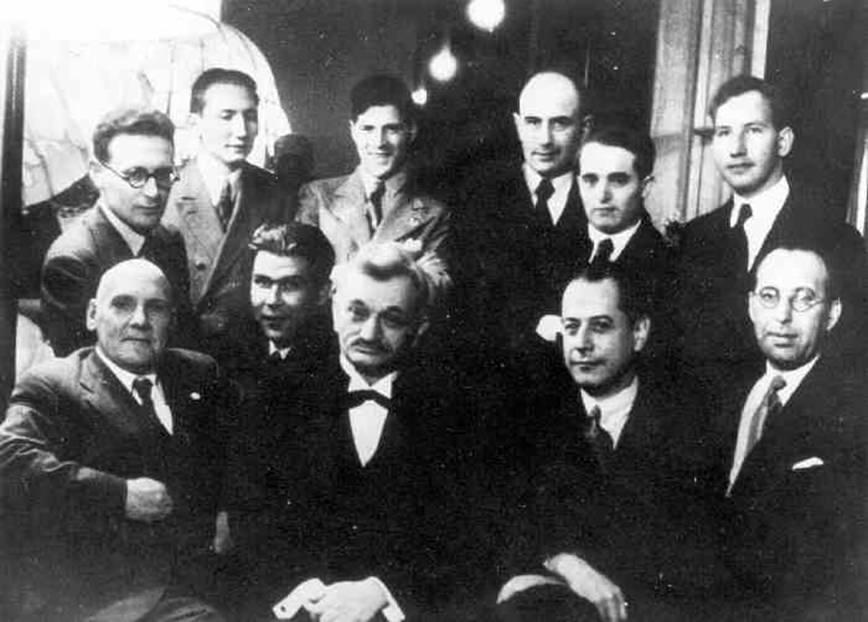
In the humid afternoons of colonial Havana, where Spanish colonial architecture baked under the Caribbean sun and the sound of clacking dominoes mixed with the murmur of café conversations, a four-year-old boy watched his father play chess. One day, the child quietly corrected his father’s illegal move. That boy was José Raúl Capablanca y Graupera, born on November 19, 1888, in Havana, Cuba—the second surviving son of a Spanish army officer. By age twelve or thirteen, he had already defeated Cuba’s national champion, Juan Corzo, in a match (+4 -3 =5). Nicknamed “the Human Chess Machine,” Capablanca became the third official World Chess Champion, reigning from 1921 to 1927. His style was deceptively simple: crystal-clear logic, flawless technique, and an almost supernatural intuition for the right move. He made grandmaster-level chess look effortless, winning games with minimal risk and maximum precision. In an era of complex theories and aggressive attacks, Capablanca proved that perfect harmony and endgame mastery could conquer the world. He lost only about 34 serious games in his entire adult career and went nearly eight years without a single tournament loss from 1916 to 1924. His life was as elegant as his play—diplomat, athlete, and ambassador of chess—until a tragic early end cut short one of the greatest talents the game has ever seen.
Capablanca’s childhood was privileged yet unassuming. His father, a Spanish officer, encouraged the boy’s natural gift, but young José focused more on play than intense study. At twelve, he won the informal match against Corzo, and in 1902 he placed fourth in the first official Cuban Championship. Chess took a backseat during his teenage years. In 1906, he enrolled at Columbia University in New York to study chemical engineering and even played on the freshman baseball team—a sport he loved alongside tennis, bridge, and swimming. But chess soon reclaimed him. He joined the Manhattan Chess Club in 1905 and quickly became its strongest rapid player. In 1906, he won a rapid tournament ahead of none other than World Champion Emanuel Lasker. Informal games against Lasker followed, and the Cuban prodigy impressed everyone with his speed and accuracy.
The breakthrough came in 1909. At age twenty, Capablanca challenged U.S. Champion Frank Marshall—a brilliant attacker who had faced the world’s best—to a match in New York. The chess world expected a tough fight; instead, Capablanca delivered a masterclass, winning +8 -1 =14 (final score 15–8 in his favor, depending on scoring). It was one of the most lopsided victories by a newcomer against an established star. Marshall himself later recommended Capablanca for the prestigious 1911 San Sebastián tournament in Spain, one of the strongest events of the era. Skeptics doubted the young Cuban’s readiness against veterans like Rubinstein, Schlechter, and Tarrasch. Capablanca silenced them by winning the tournament outright with 9½/15, half a point ahead of Rubinstein and Vidmar. His victory included a famous game against Ossip Bernstein where he sacrificed material for a winning endgame squeeze. At twenty-two, he was now a legitimate contender for the world title.

Negotiations with Lasker dragged on for years due to disputes over conditions and prize funds. Capablanca toured extensively, playing simultaneous exhibitions across the United States in 1909–1910, scoring an astonishing 96.9% (over 600 games with minimal losses). In 1911, he challenged Lasker formally, but the match fell through. Instead, he traveled to Europe, winning strong events and establishing himself as the clear number-one challenger. World War I interrupted major international play, but Capablanca continued dominating in the Americas. From February 1916 to March 1924—an eight-year span covering his rise and championship win—he lost only one serious game (to Oscar Chajes in 1916) before another long undefeated streak. In 1918, he won the New York tournament convincingly.
By 1920, Lasker, exhausted by age and the war’s aftermath, was ready to cede the title. He even offered to resign it without a match, acknowledging Capablanca’s “brilliant mastery.” Public pressure led to a formal contest in Havana in 1921. The match was played in tropical heat, but Capablanca remained cool and precise. He won four games without a single loss, with ten draws. Lasker, the fighting philosopher who had held the title for 27 years, resigned after fourteen games. On April 21, 1921, José Raúl Capablanca became the third World Chess Champion—the first to win the title without losing a game in the match. Cuba erupted in celebration; their national hero had conquered the chess world.
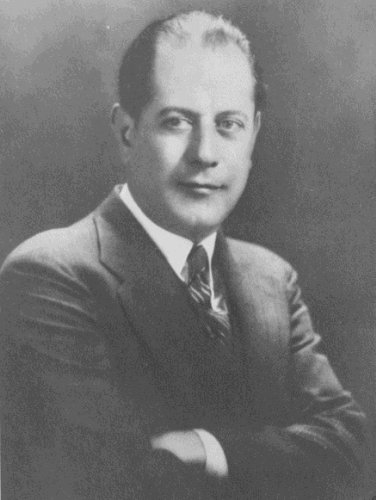
As champion, Capablanca continued his effortless dominance. In 1922, he won the London tournament with 13/15, no losses, finishing 1½ points ahead of Alexander Alekhine. During that event, he proposed the “London Rules” to standardize future world championship matches: first to six wins, minimum $10,000 purse, and clear conditions for challengers. Several top players signed on, though the rules were never fully implemented due to financial and organizational issues. Capablanca played sparingly as champion, preferring exhibitions and diplomacy. In 1913, the Cuban government had appointed him to an informal diplomatic post in the Foreign Office, which allowed him to travel freely for chess while representing his country—an ideal arrangement for the elegant, multilingual champion.
His reign featured remarkable tournament results: second at New York 1924 (behind Lasker but ahead of Alekhine, where he suffered his first loss in eight years—to Richard Réti); third at Moscow 1925; first at Lake Hopatcong 1926; and a dominant first at New York 1927 (+10 -1 =9), finishing 2½ points ahead of Alekhine just before their title match. Throughout this period, his endgame technique was legendary. He could convert tiny advantages into wins with machine-like accuracy, and his defensive play in equal positions was nearly impenetrable. Bobby Fischer later praised his “real light touch,” while contemporaries marveled at how he made difficult positions look simple.
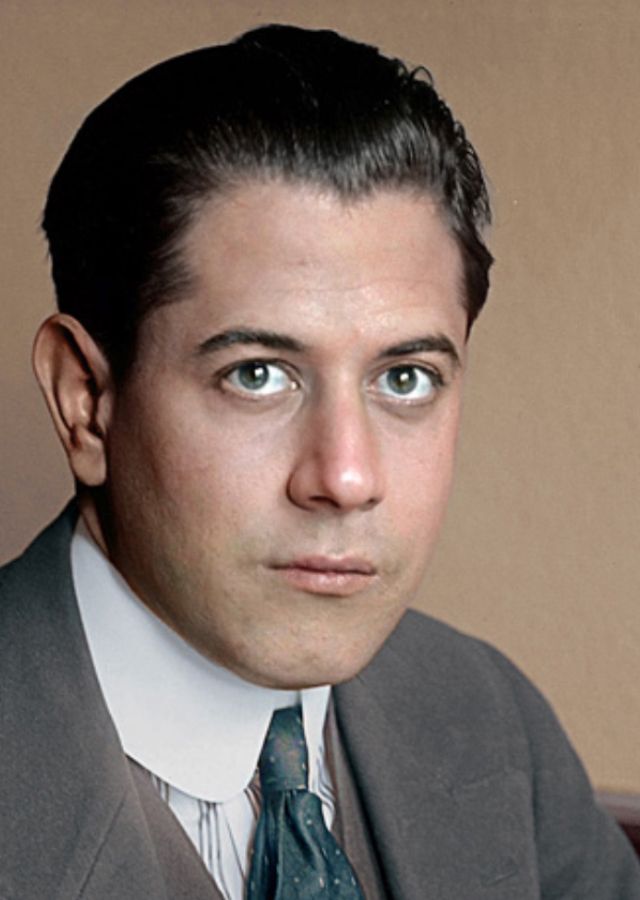
The 1927 World Championship match against Alexander Alekhine in Buenos Aires was expected to be another coronation for Capablanca. Alekhine had never beaten him in a serious game before, and Capablanca entered as the heavy favorite. The match was a marathon—34 games over nearly three months. Alekhine, a ferocious attacker and meticulous preparer, surprised everyone by studying Capablanca’s style deeply and varying his openings. Capablanca started strongly but fatigue, overconfidence, and Alekhine’s psychological pressure took their toll. Alekhine won six games to Capablanca’s three, with 25 draws. On November 29, 1927, Capablanca lost the title. It was a bitter disappointment; he believed a rematch would be straightforward, but Alekhine avoided one for the rest of his life, citing financial and other reasons.
After losing the crown, Capablanca took a break but returned in the 1930s. Results were mixed due to health issues and age, yet flashes of brilliance remained. He placed fourth at Hastings 1934-35, fourth at Moscow 1935, and second at Margate 1935. In 1936, he won Moscow outright (+8 =10) ahead of Botvinnik and Flohr, then tied for first with Botvinnik at Nottingham (ahead of Euwe, Fine, Reshevsky, and Lasker). These were his last major tournament victories. In 1938, he suffered his worst result at the AVRO tournament in the Netherlands—seventh out of eight—with health problems (hypertension) affecting his concentration during long travels between venues. His final tournament was Margate 1939 (second place), followed by a stellar performance on first board for Cuba at the Buenos Aires Olympiad (+7 =9), winning gold.
Capablanca also contributed to chess theory. He advocated simpler, more logical play and wrote influential books, including Chess Fundamentals (1921), which remains a classic for beginners and intermediates emphasizing endgames and basic principles. He claimed he rarely studied opening books, relying instead on natural talent and understanding of positions.
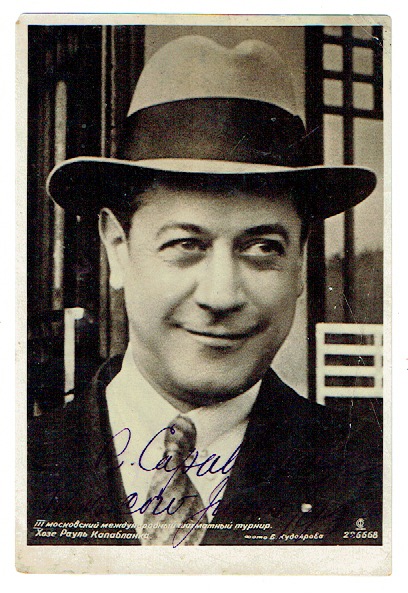
Tragedy struck early. On March 7, 1942, while watching a game at the Manhattan Chess Club in New York, Capablanca suffered a cerebral hemorrhage (stroke) triggered by severe hypertension. He collapsed, was rushed to Mount Sinai Hospital, and died the next morning, March 8, 1942, at age 53. Emanuel Lasker had died in the same hospital just a year earlier. Tributes poured in from around the world. Alekhine wrote that chess had lost “a very great chess genius whose like we shall never see again.” Lasker had once said, “I have known many chess players, but only one chess genius: Capablanca.”
Capablanca’s legacy is immense. He lost fewer games than almost any top player in history and proved that elegance and precision could triumph over complexity. His endgame mastery influenced generations, from Fischer to modern engines that often validate his intuitive choices. He helped popularize chess globally as a cultured diplomat and athlete. In Cuba, he remains a national icon; his grave in Havana is a pilgrimage site for chess lovers.
Today, when players speak of “Capablanca-like” simplicity or study his effortless wins, they touch the essence of his genius: chess as pure logic and harmony, played with the light touch of a master who made the impossible look routine. From the Havana prodigy who corrected his father at four to the champion who reigned with unmatched grace, José Raúl Capablanca embodied the beauty of the game at its highest level.