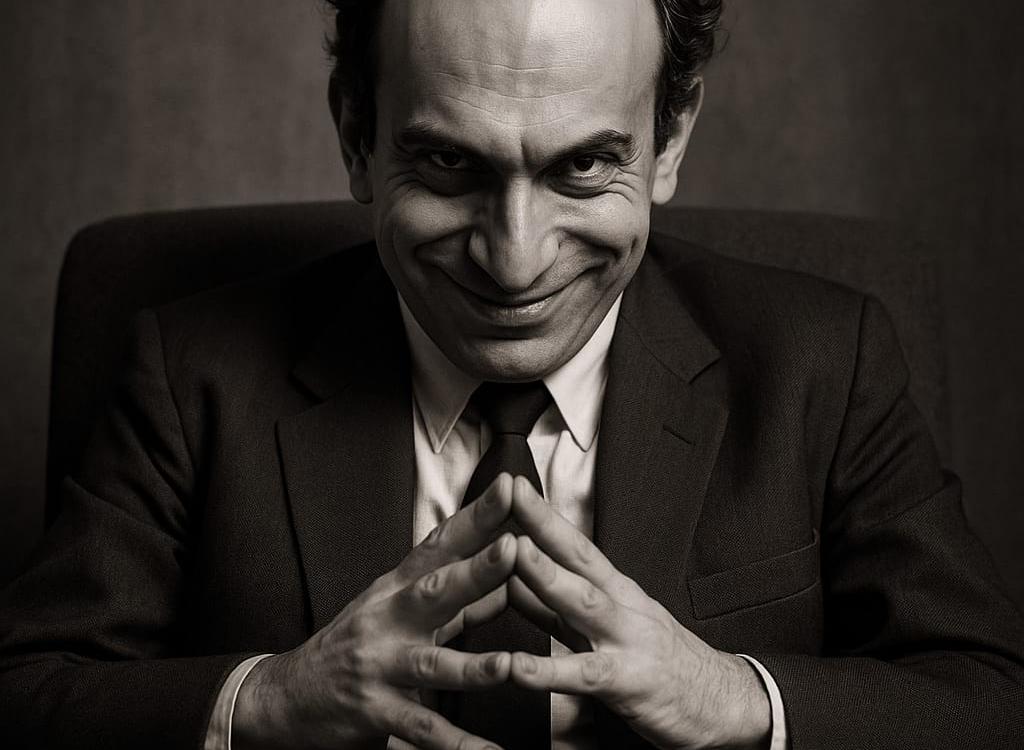
In the narrow, cobblestoned streets of 1930s Riga, where the Baltic wind carried the scent of the sea and the murmur of Yiddish, Russian, and Latvian, a frail, bespectacled boy with a mischievous grin first pushed a wooden pawn across a chessboard at the age of eight. Mikhail Nekhemyevich Tal, born on November 9, 1936, into a Jewish intellectual family—his father a respected doctor and his mother a homemaker—would become chess’s ultimate wizard. The eighth official World Chess Champion, he seized the title in 1960 at the astonishing age of twenty-three, the youngest in history until Garry Kasparov broke the record decades later. Tal held the crown for only one year (1960–1961), yet his brief reign and dazzling games forever changed how the world saw chess. He didn’t play positions; he cast spells. Sacrifices flowed from his fingers like magic, complications multiplied, and opponents often collapsed under psychological pressure and tactical overload. Known as the “Magician from Riga,” Tal combined lightning calculation, fearless imagination, and a hypnotic charisma that made even lost positions dangerous. Health plagued him—chronic kidney disease caused constant pain and hospitalizations—but he played through it with a smile, turning suffering into art. His life was short but incandescent: from Soviet prodigy to world champion, from tactical revolutionary to beloved elder statesman of chess, Tal left behind games that still feel like miracles.
Tal’s childhood was marked by both brilliance and fragility. Evacuated during World War II, the family returned to Riga after the war. At ten, he joined the Riga Palace of Young Pioneers chess club and improved rapidly under coach Alexander Koblencs. By fourteen, he was playing in adult tournaments. In 1954, at seventeen, he won the Latvian Championship. Two years later, he tied for first in the Soviet Championship but lost the playoff. In 1957, still only twenty, he won the Soviet Championship outright—the youngest player ever to do so at the time. The chess world took notice. In 1958, he dominated the Portorož Interzonal, then crushed the 1959 Candidates tournament in Bled, Zagreb, and Belgrade with a staggering 20/28 score, finishing 1½ points ahead of Paul Keres. At twenty-two, he earned the right to challenge the seemingly invincible Mikhail Botvinnik for the world title.
The 1960 World Championship match in Moscow was pure theater. Botvinnik, the iron-willed Patriarch and three-time champion, was the heavy favorite. Tal was the unpredictable outsider who openly admitted he sometimes didn’t calculate everything to the end—he simply “felt” the position. Game after game, Tal sacrificed pawns, pieces, even queens, creating chaos that Botvinnik’s logical mind struggled to navigate. In one legendary encounter, Tal offered a rook on move 21 that Botvinnik declined, only to lose anyway. The younger man’s psychological edge was overwhelming; he would stare intently, chain-smoke, and radiate confidence. After twenty-one games, Tal led by a commanding margin. On May 7, 1960, he won the match 12½–8½ (+6 -2 =13), becoming the youngest World Champion in history. Riga erupted in celebration; the Soviet Union hailed its new hero. Tal’s victory was not just a title win—it was a stylistic revolution. Romantic attacking chess, long overshadowed by positional science, roared back to life.
As champion, Tal continued to enchant. He won the 1960 Soviet Championship again and toured the world giving exhibitions. Yet health issues loomed. Chronic kidney problems (he had already lost one kidney as a teenager) caused excruciating pain, and he often played while medicated or in hospital beds. In 1961, Botvinnik exercised his rematch right. This time the older champion prepared meticulously, studying Tal’s style and limiting complications. The match in Moscow was one-sided: Botvinnik won 13–8 (+10 -5 =6). Tal, weakened by illness and perhaps overconfident, could not repeat the magic. At twenty-four, he became the youngest former world champion ever. He accepted the defeat gracefully, later joking that “Botvinnik was the only player who could make me look like a beginner.”
Tal never regained the title, but his post-championship career was astonishingly rich. He won the Soviet Championship five more times (1962, 1963, 1967, 1972, 1974)—a record seven in total. He triumphed in countless international tournaments: Bled 1961, Hastings 1963/64, Sarajevo 1966, Tallinn 1971, and many others. In 1965 and 1968 he reached the Candidates final, losing both times to Boris Spassky and Tigran Petrosian respectively. Even in the 1970s and 1980s, despite declining health, he remained dangerous. At the 1979 Riga Interzonal he finished second; in 1988, at age fifty-one, he still scored impressively at the Olympiad. His style evolved—he became more positional when needed—but the tactical spark never died. One famous 1971 game against Wolfgang Uhlmann featured a queen sacrifice that is still replayed in wonder.
Off the board, Tal was charismatic and approachable. He loved jokes, fast cars, and good company. He married three times and had children. Despite his fame, he remained humble, often saying he played chess “for fun” even at the highest level. He wrote books, including The Life and Games of Mikhail Tal (1976), a candid classic filled with his own annotations and humor. As a journalist for the Latvian newspaper Rīgas Balss, he covered chess with wit and insight. In his final years, kidney failure and heart complications forced frequent hospital stays, yet he continued analyzing positions until the end.
On June 28, 1992, in a Moscow hospital, Mikhail Tal died at age fifty-five from complications of his long illness. Tributes flooded in from around the world. Garry Kasparov called him “the greatest genius I ever met.” Anatoly Karpov, who had trained with him, spoke of his unique creativity. His funeral in Riga drew thousands; he was buried in the Jewish cemetery there, his grave marked by a simple stone with chess pieces. Posthumously, he was awarded the World Chess Hall of Fame induction and remains one of the most beloved figures in the game.
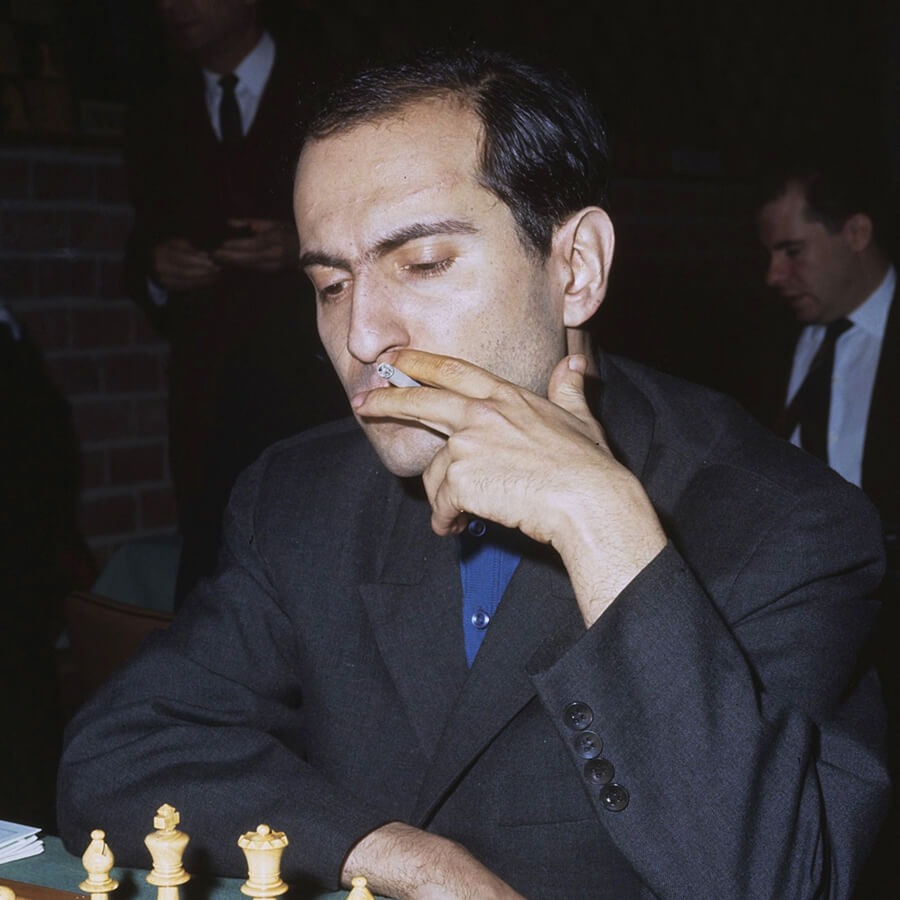
Tal’s legacy is pure magic. He played over 2,700 tournament games with a lifetime score of nearly 70%, but it was the quality, not the quantity, that mattered. His combinations—over 100 documented “immortal” games—taught generations that chess could be art as well as science. He influenced players like Kasparov, who credited Tal’s boldness for shaping his own attacking style. Even modern engines, when set to “human” modes, often validate Tal’s intuitive sacrifices as objectively sound. He proved that in chess, imagination can triumph over calculation alone.
From the frail boy in Riga who beat grandmasters at twenty to the smiling champion who lit up the board with fireworks, Mikhail Tal embodied the joy and danger of chess. He held the title only briefly, but his spirit lives in every bold sacrifice and every moment when a player refuses to play it safe. The Magician from Riga didn’t just win games—he made chess feel alive, unpredictable, and wondrous.