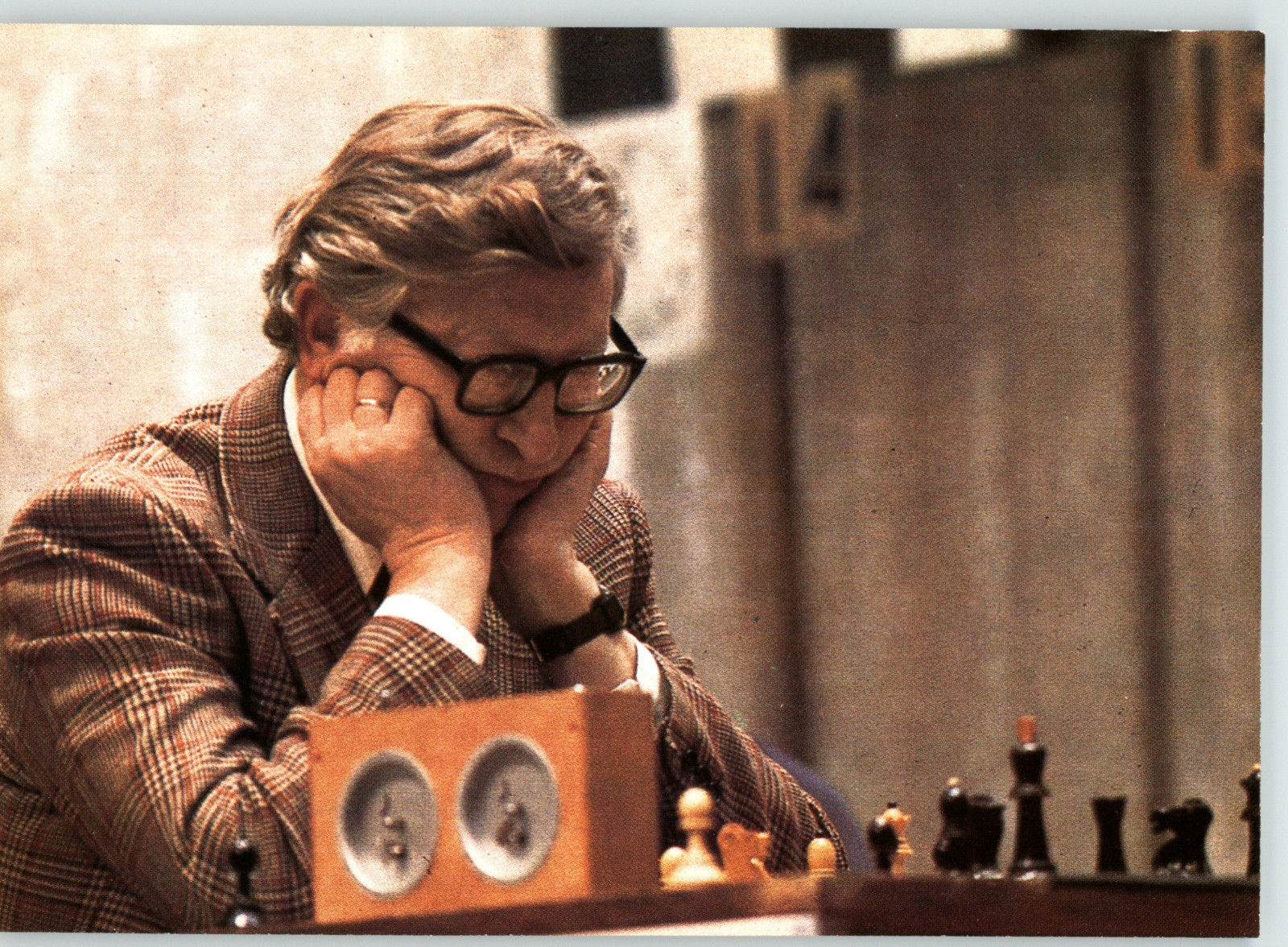
In the bustling streets of pre-war Moscow, where the echoes of Soviet industrialization mixed with the strains of classical music drifting from open windows, a boy with a beautiful baritone voice discovered chess at the age of six. Vasily Vasilyevich Smyslov, born on March 24, 1921, in Moscow, would grow into one of the most elegant and harmonious players in chess history. The seventh official World Chess Champion, he held the title for just one year (1957–1958), but his influence stretched far beyond that brief reign. Smyslov’s style was pure poetry on the board: logical development, flawless technique, and an almost instinctive sense of harmony in every position. He excelled particularly in endgames, where his intuitive understanding allowed him to convert tiny advantages or hold difficult positions with seemingly effortless grace. A trained opera singer with a rich baritone, Smyslov often said that chess and music shared the same soul—both required balance, rhythm, and inner harmony. From challenging the iron-willed Mikhail Botvinnik three times to remaining competitive at the highest level into his sixties, Smyslov embodied artistic precision and quiet resilience throughout a career that spanned over seven decades.
Smyslov learned chess from his father, a strong amateur player and engineer who had once drawn with Alexander Alekhine in a simultaneous exhibition. The game quickly became a passion, but music was equally important. Young Vasily studied singing seriously and could have pursued a professional career as an opera singer. In the end, chess won out, though he never abandoned his love for music—he often sang for friends and even performed in concerts later in life.
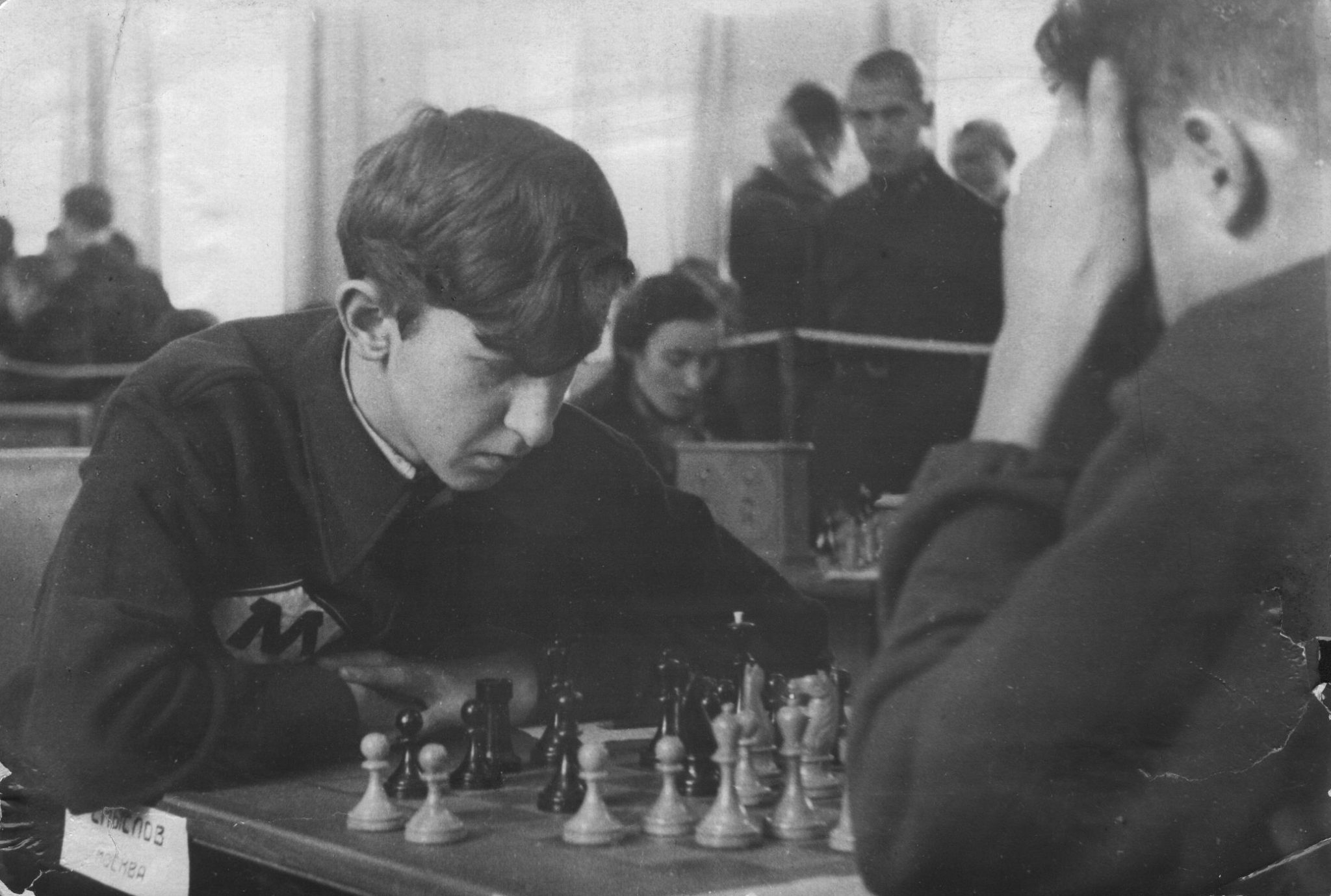
His rise in Soviet chess was steady and impressive. In 1938, at seventeen, he won the Moscow Championship. By 1940, he tied for first in the USSR Championship (though he lost the playoff). The war years interrupted normal competition, but Smyslov served in the Soviet army and continued playing when possible. After the war, he quickly established himself among the elite. He finished second in the 1948 World Championship tournament behind Botvinnik, earning the right to challenge for the title in the future. In the early 1950s, he consistently placed near the top in Candidates tournaments and Soviet championships.
The first world championship match against Botvinnik came in 1954. It ended in a 12–12 draw, allowing Botvinnik to retain the title under the rules then in force. Smyslov had shown he could match the champion’s depth and preparation. Three years later, in 1957, the rematch in Moscow proved decisive. Smyslov played with remarkable harmony and precision, outmaneuvering Botvinnik in strategic battles and capitalizing on small advantages. He won the match 12½–9½ (+6 -3 =13), becoming the seventh World Champion on April 5, 1957, at age 36. The Soviet chess community celebrated the smooth transition within their dominant school. Smyslov’s victory was seen as the triumph of elegant, classical play over rigid scientific preparation.
His reign as champion was short but dignified. As titleholder, he participated in major tournaments while continuing his musical interests. In 1958, Botvinnik exercised his right to a return match. This time, the older champion came better prepared and more motivated. Smyslov fought hard, but Botvinnik regained the title with a score of 12½–10½. The loss was graceful; Smyslov accepted it philosophically, later noting that the match had been extremely close in quality of play.
Even after losing the crown, Smyslov remained a formidable force. He reached the Candidates final again in 1965 (losing to Boris Spassky) and continued competing at the highest level into the 1970s. One of his most remarkable late-career achievements came in 1981, when at age 60 he finished second in the Candidates tournament behind Garry Kasparov—defeating younger grandmasters with his trademark endgame mastery. In 1984, he again reached the Candidates final. These results made him the oldest player ever to come so close to another world title match.
Smyslov’s tournament record was extraordinary for its consistency and longevity. He won the USSR Championship three times (1949, 1955, 1971) and triumphed in many international events, including the 1957 Candidates tournament. He represented the Soviet Union on numerous Olympiad teams, contributing to team gold medals with high individual scores. His style emphasized piece coordination and pawn structure harmony rather than sharp tactical complications. He rarely lost due to blunders; most of his defeats came from deep strategic battles. Colleagues often described his play as “logical to the point of inevitability.”
Beyond the board, Smyslov authored several influential chess books, including My Best Games and works focused on endgame technique. He also pursued his passion for singing, recording songs and occasionally performing. In his later years, he suffered from poor eyesight and health issues that limited his playing, yet he remained active in chess analysis and correspondence until nearly the end of his life.
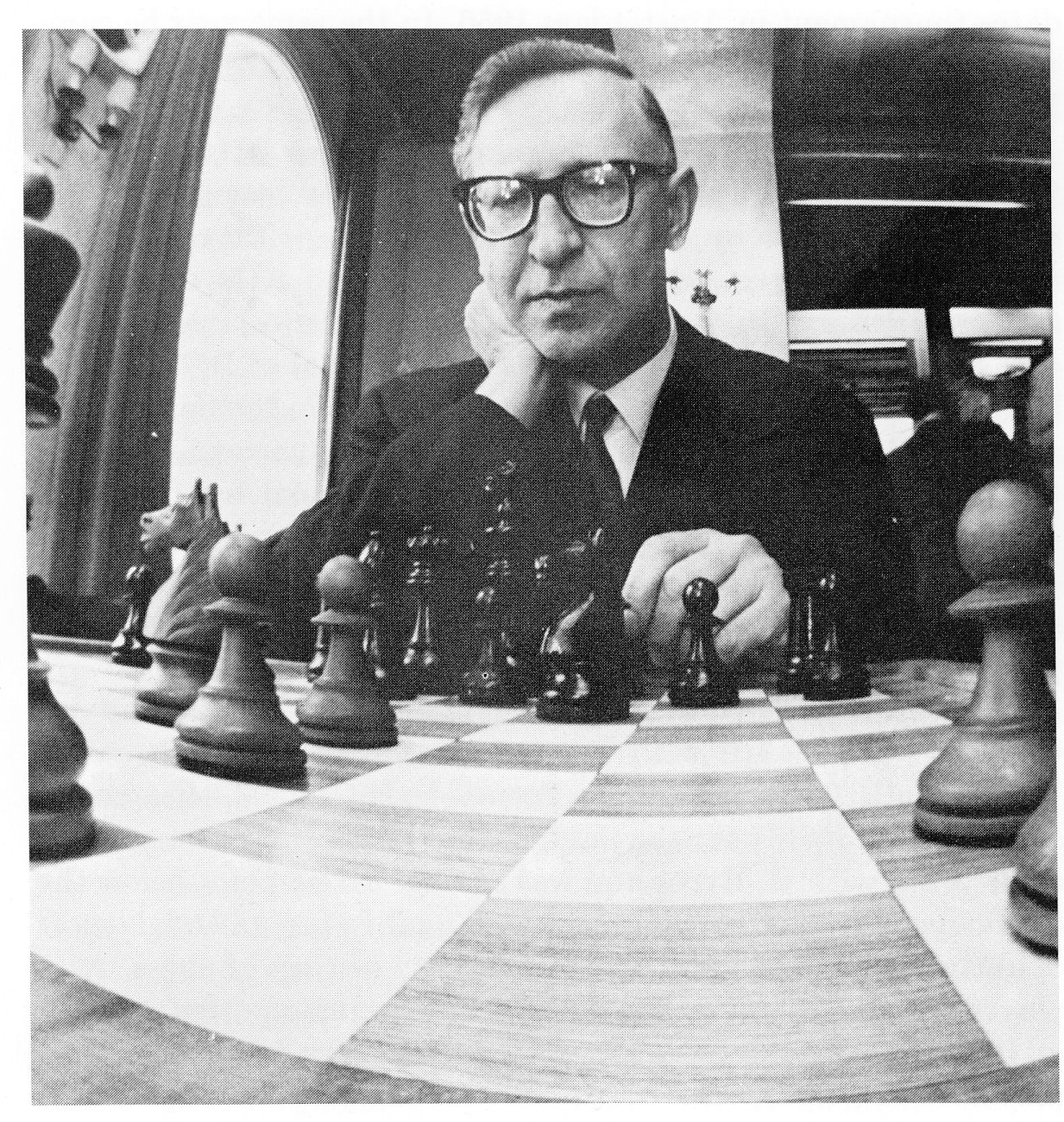
Vasily Smyslov died on March 27, 2010, in Moscow, just three days after his 89th birthday. He was buried with honors befitting a national hero of Soviet and Russian chess.
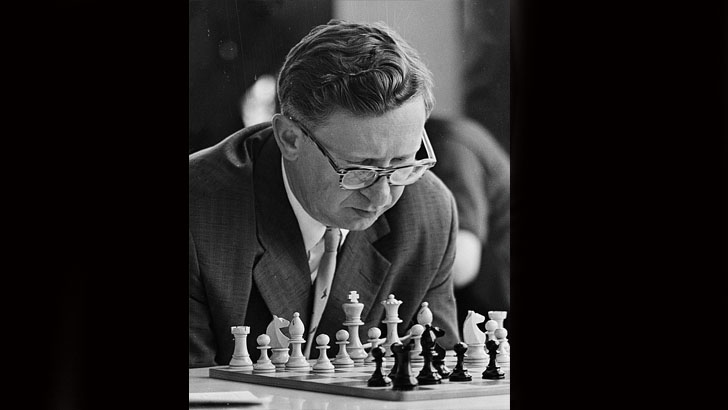
His legacy is that of harmony and longevity. Smyslov proved that elegant, classical chess could compete with the most aggressive or scientific styles. His endgame technique remains a model for students today—many of his games are studied for their flawless conversion of small advantages. He bridged the Botvinnik era and the rise of Fischer and Karpov, showing that the Soviet school produced not only fighters but also artists. Anatoly Karpov and Garry Kasparov both praised his intuitive understanding of positions. Even in the computer age, engines frequently confirm the deep correctness of his seemingly simple moves.
From a musically gifted Moscow boy who chose chess over opera to the world champion whose play sang with harmony, Vasily Smyslov brought beauty and balance to the 64 squares. He held the title only briefly, but his influence on how the game is understood and played endures for generations. In the long line of world champions, the “Voice of Harmony” remains one of its most lyrical and beloved figures.