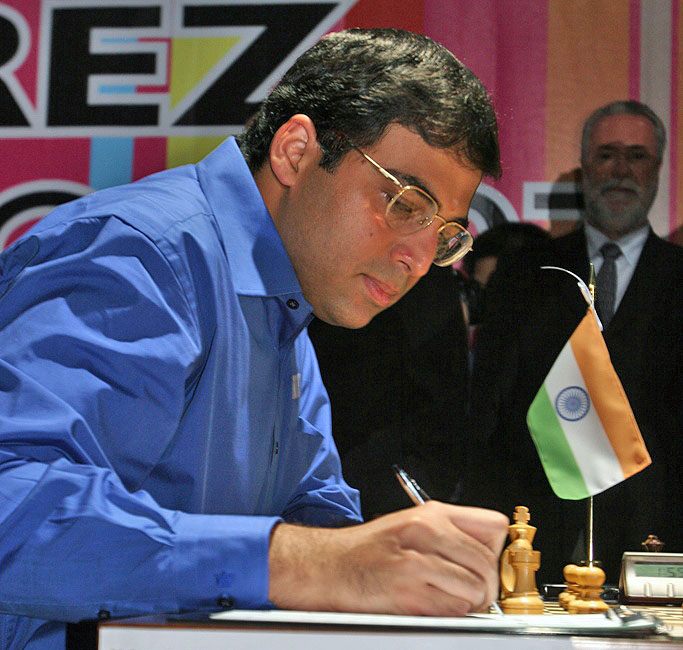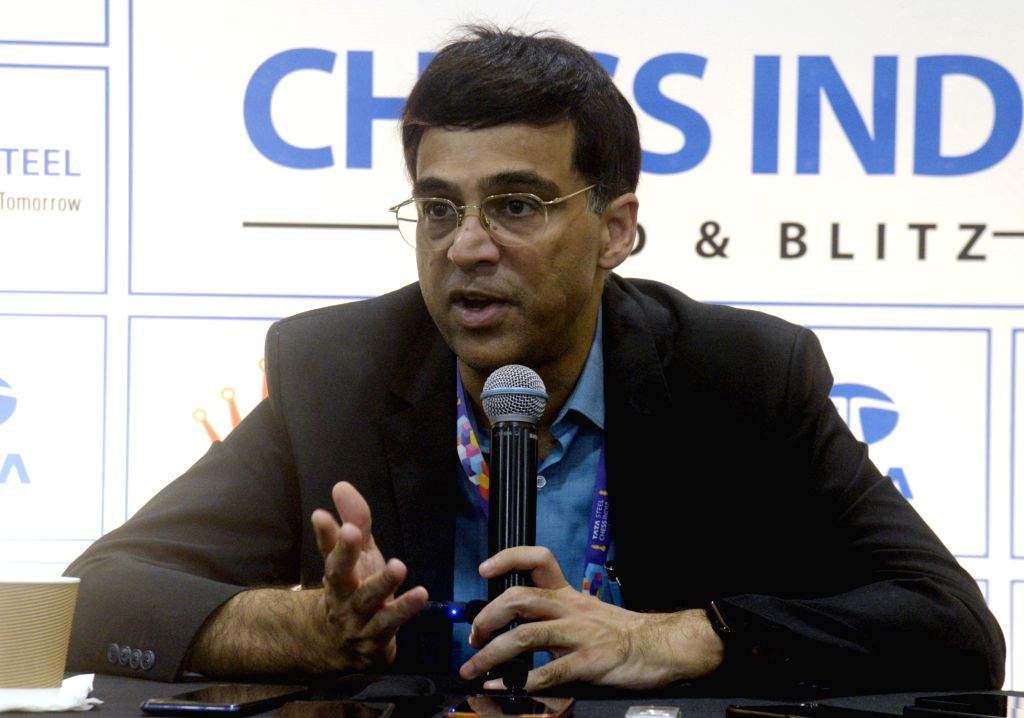
In the bustling southern Indian city of Chennai (then Madras), where the humid air carried the scent of jasmine and the constant hum of scooters, a six-year-old boy sat with his mother on the floor of their modest apartment and learned the moves of chess from a simple wooden set. Viswanathan “Vishy” Anand, born on December 11, 1969, would grow into the fifteenth official World Chess Champion and the man who ignited a chess revolution across the world’s second-most-populous nation. He held the undisputed title from 2007 to 2013, defending it successfully three times in an era of super-grandmasters and rising computer influence. Anand’s style was universal and electrifying: lightning-fast calculation, flawless opening preparation, and the ability to switch seamlessly between aggressive attacks and ironclad defense. Unlike the positional grinders or pure tacticians before him, he played with intuitive speed and harmony, making complex positions look effortless. Nicknamed the “Tiger of Madras” for his fierce competitiveness and rapid strikes, Anand became India’s first world champion, inspiring millions of children in a country where cricket had long dominated sports. His career spanned five decades, from the pre-computer era to the age of engines, and he remained competitive at the highest level well into his fifties. Beyond the board, he is a national hero, philanthropist, and ambassador who transformed chess into a mass movement in India. His story is one of quiet discipline, explosive talent, and the power of one man to change a nation’s sporting culture.
Anand’s early life was shaped by his family’s love of learning. His mother, Susheela, taught him chess and encouraged his prodigious memory—he could recall entire games after a single glance. By age nine he was winning local tournaments. At fourteen he became the youngest Indian to earn the International Master title. In 1988, at eighteen, he became India’s first grandmaster—the youngest Asian ever to achieve the title at the time. That same year he won the World Junior Championship in Australia. His rapid ascent continued: in 1990 he qualified for the Candidates cycle, becoming the first Indian to reach that stage. Though he fell short in early attempts, his consistency and speed earned him the nickname “Lightning Kid.”
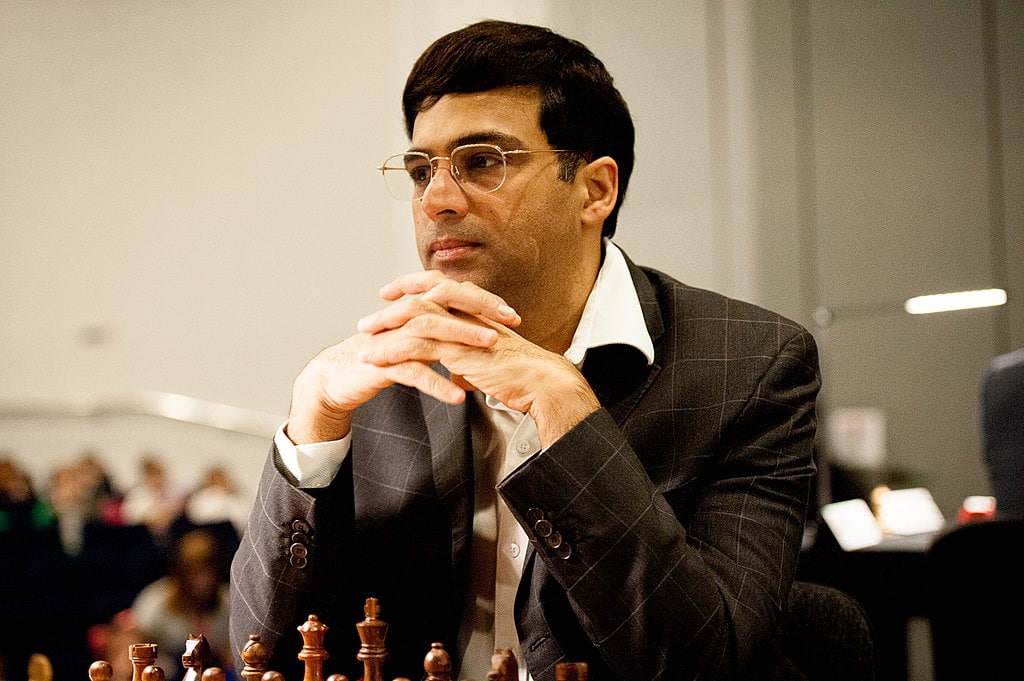
The 1990s and early 2000s saw Anand establish himself as a perennial world-title contender. He reached the final of the FIDE World Championship knockout in 1995 (losing to Anatoly Karpov) and again in 1998 and 2000. He won the prestigious Linares super-tournament multiple times and dominated rapid and blitz events, claiming the World Rapid Championship in 2003 and 2007. His universal style—equally comfortable in sharp Sicilian attacks or quiet positional battles—made him dangerous against any opponent. In 2007, FIDE organized a double-round-robin tournament in Mexico City featuring the world’s top eight players to determine the new undisputed champion. Anand dominated with 9/14, finishing a full point ahead of Vladimir Kramnik and Boris Gelfand. On September 29, 2007, at age thirty-seven, Viswanathan Anand became the fifteenth World Chess Champion—the first from Asia and the first from outside the traditional Soviet/Russian powerhouse since Bobby Fischer.
As champion, Anand defended his title with calm authority. In 2008 in Bonn, Germany, he faced former champion Vladimir Kramnik in a twelve-game match. Anand won convincingly 6½–4½ (+3 -1 =7), using deep preparation in the Meran Variation and sharp tactics to neutralize Kramnik’s solidity. In 2010 in Sofia, Bulgaria, he defended against Veselin Topalov in what many called one of the most dramatic matches of the century. Trailing early, Anand won the decisive twelfth game with Black in a thrilling rook-and-pawn ending to retain the title 6½–5½. In 2012 in Moscow, he faced Boris Gelfand in another tense encounter. The classical games ended 6–6, but Anand won the rapid playoff 2½–1½ to keep the crown. These defenses showcased his adaptability—he could grind out endgames against Kramnik, survive Topalov’s aggression, or out-calculate Gelfand in time pressure.
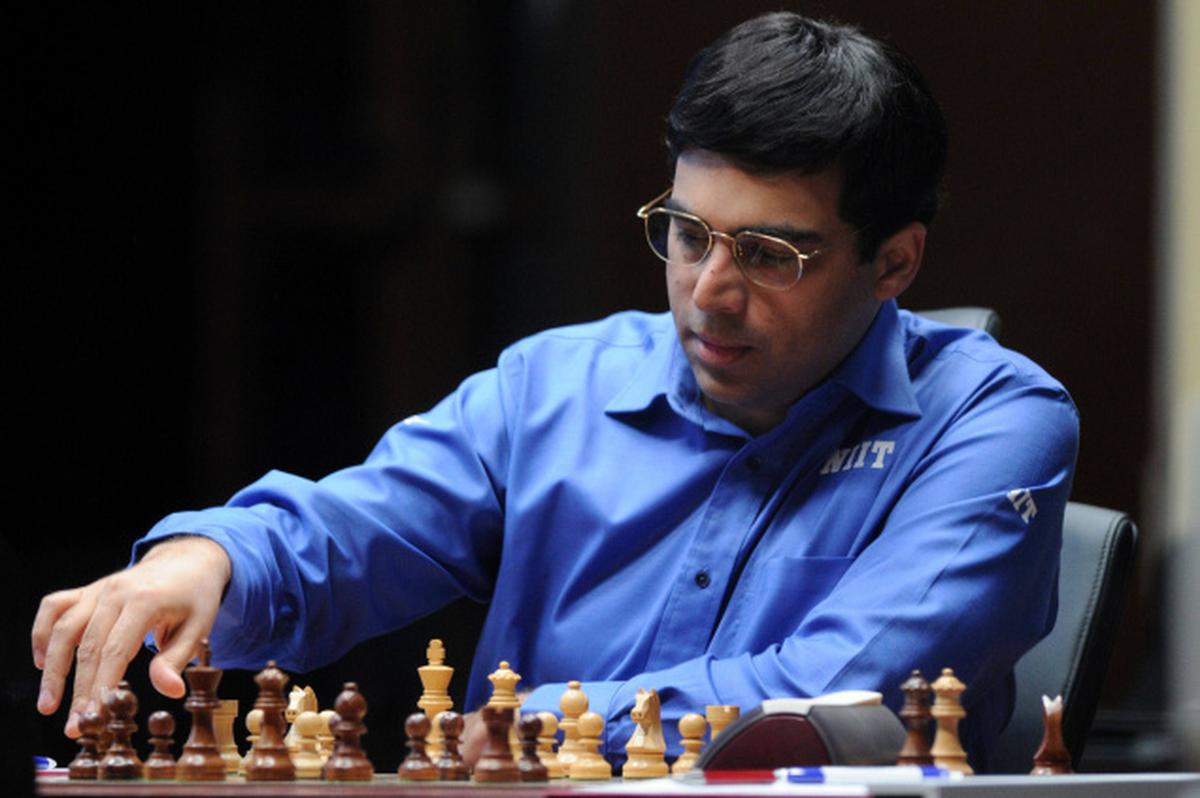
The end of his reign came in 2013 in Chennai—his hometown—against the rising Norwegian star Magnus Carlsen. The match was emotional for Anand, playing before his own countrymen. Carlsen’s youthful energy and precise endgame technique proved too much; Anand lost 6½–3½ (+3 -0 =7 for Carlsen, with Anand winning none). At forty-three, he graciously conceded the title, later calling the match a turning point that allowed him to reinvent himself. He did not disappear. Anand continued competing at the highest level, winning the 2014 Candidates (though he lost the subsequent title match to Carlsen again in 2014) and remaining a top-ten player for years. He claimed multiple World Rapid and Blitz titles (including 2017 Rapid) and reached the 2018 Candidates at age forty-eight. Even in his fifties he scored impressively in super-tournaments and Olympiads, representing India with pride.
Anand’s tournament record is extraordinary. He has won more than 100 major events, including Wijk aan Zee (multiple times), Linares, Dortmund, and the Tal Memorial. He represented India at twelve Chess Olympiads, winning individual board golds and helping the team achieve historic results. His peak rating reached 2817 in 2010, and he held the world number-one ranking for several periods. His opening innovations—particularly in the Ruy Lopez, Sicilian, and Queen’s Gambit—remain influential. Colleagues describe his calculation speed as almost superhuman; in his prime he could see deeper and faster than almost anyone.
Off the board, Anand is known for his humility, intellect, and generosity. He studied at the Don Bosco School and Loyola College in Chennai before focusing full-time on chess. He married Aruna in 1996; she has been his constant support and manager. The couple has one son. Anand has authored books, including Mind Master (2020), sharing insights on psychology and preparation. He founded the Anand Foundation to promote chess education in Indian schools and has worked with UNICEF and other organizations. In India, his 2007 victory triggered a chess boom—thousands of children took up the game, academies sprang up nationwide, and India now produces a steady stream of grandmasters. He received India’s highest civilian awards, including the Padma Vibhushan.
As of 2026, at age fifty-six, Anand remains active. He competes occasionally in rapid and classical events, serves as a commentator for major tournaments, and coaches promising Indian talents. He continues to promote chess globally through exhibitions and online platforms, proving that champions can evolve into mentors without losing their love for the game.
Viswanathan Anand’s legacy is transformative. He brought chess to the heart of India, turning a niche Western pursuit into a national passion and paving the way for future stars like Gukesh. His universal style bridged the classical and modern eras, showing that speed, preparation, and harmony could triumph over raw aggression. From the boy in Chennai who learned moves on the floor to the Tiger who roared on the world stage for six years, Anand proved that quiet focus and relentless curiosity can conquer empires. In the long line of champions, the Tiger of Madras stands as the pioneer who opened new continents for the game—and whose calm brilliance still inspires millions to think one move ahead.