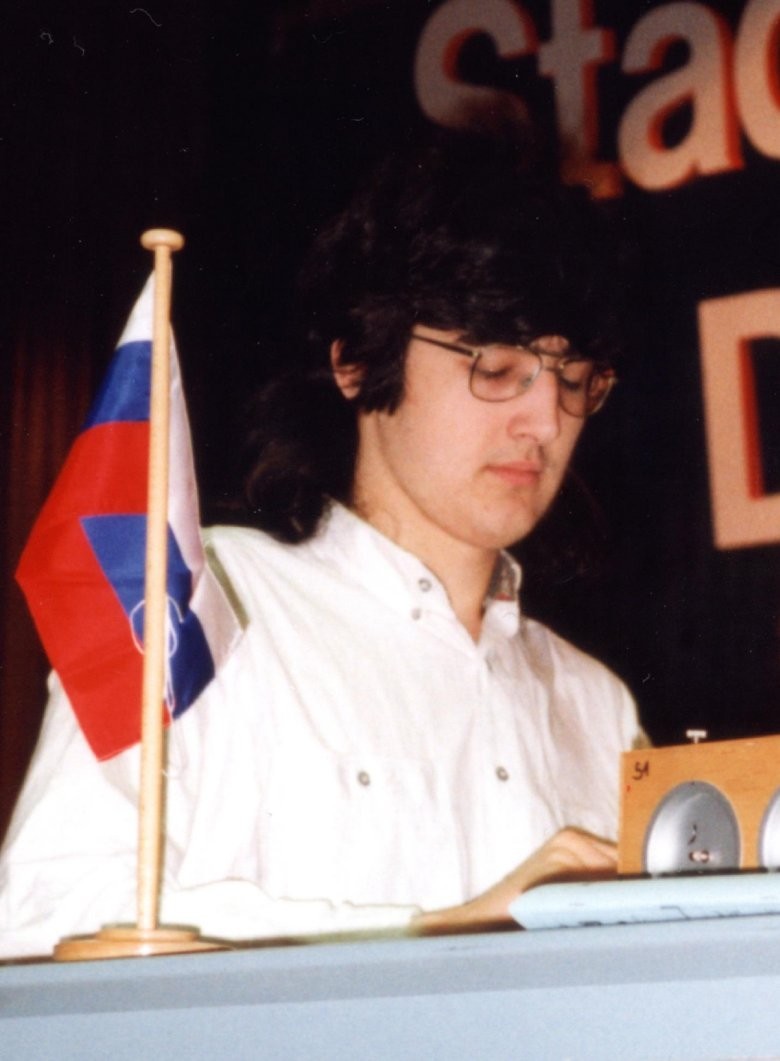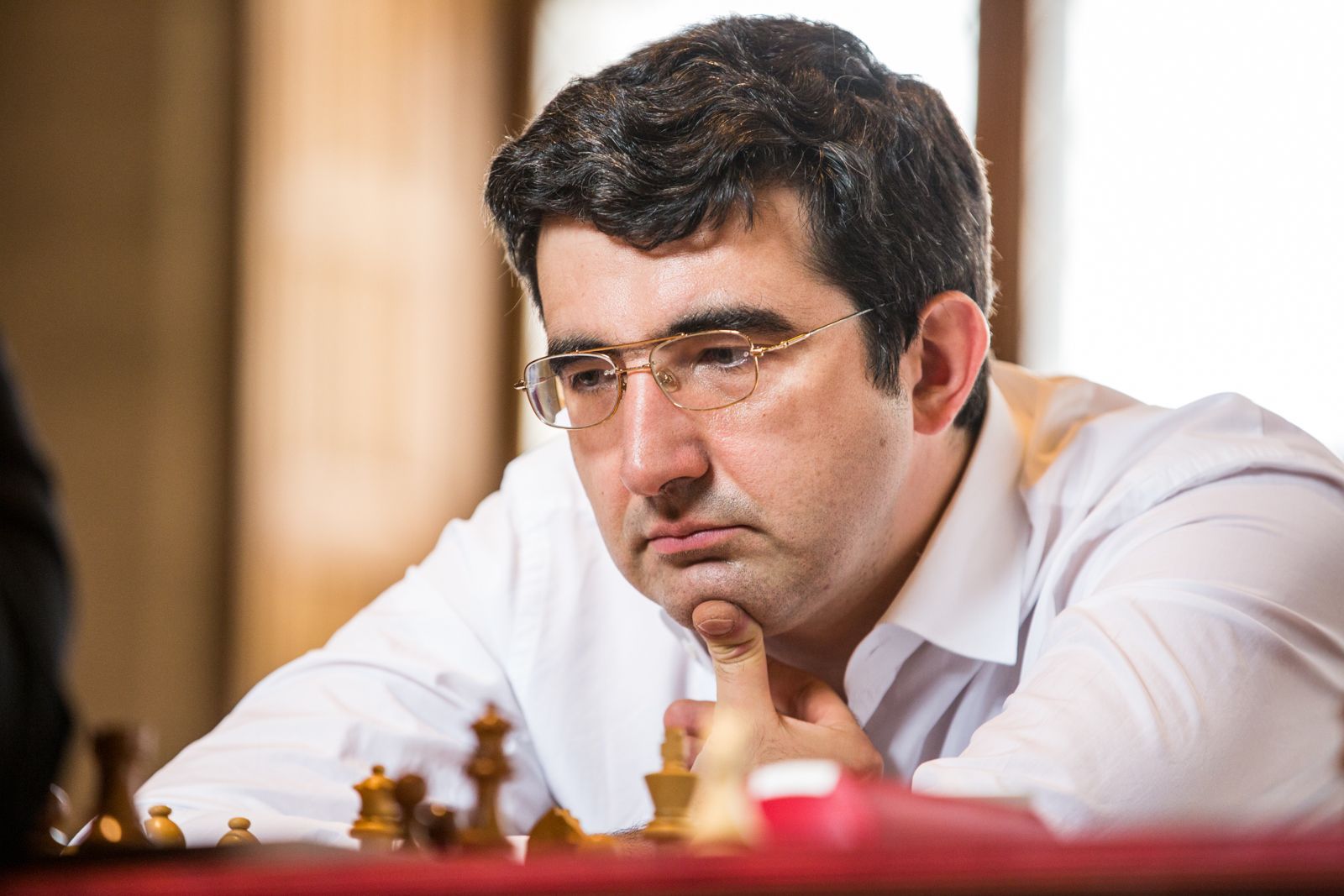
In the quiet Black Sea port town of Tuapse, Russia, a four-year-old boy sat on his father’s lap and learned the moves of chess from a simple wooden set. Vladimir Borisovich Kramnik, born on June 25, 1975, would grow into one of the most technically flawless and strategically profound players in chess history. The fourteenth official World Chess Champion, he held the undisputed title from 2000 to 2007, becoming the player who finally dethroned Garry Kasparov and helped unify the fractured world championship. Kramnik’s style was the antithesis of flash: solid, logical, and relentlessly precise. He built “fortresses” that opponents could not breach, revived forgotten openings like the Berlin Defense to neutralize aggressive attacks, and excelled in endgames with computer-like accuracy. Nicknamed “the Berlin Wall” after his impenetrable defense in the 2000 match, Kramnik represented a return to classical values in an era of explosive tactics and computer preparation. A child prodigy who trained under Mikhail Botvinnik, he rose without controversy, won the title through pure merit, and defended it in dramatic fashion before passing it to Viswanathan Anand. Even after retiring from classical chess in 2019, Kramnik remained a respected voice in the game, a coach, commentator, and advocate for fair play. His life story is one of quiet determination, technical mastery, and the rare ability to change the course of chess history without ever raising his voice.
Kramnik’s talent emerged early. By age eleven he was already beating adult masters in local tournaments. In 1987, at twelve, he was invited to Mikhail Botvinnik’s legendary chess school—the same academy that had shaped Kasparov and Karpov. There he absorbed the Soviet school’s rigorous analytical discipline. In 1991, at sixteen, he won the World Under-18 Championship. The breakthrough came in 1992 when, still only seventeen, he was selected as a reserve for the Russian team at the Manila Olympiad. He scored an astonishing 8/9 on board two, helping Russia win gold and earning the grandmaster title. By 1993 he was competing in elite events, finishing third at the Linares super-tournament behind Kasparov and Karpov.
The 1990s saw Kramnik establish himself as the heir apparent. He won Dortmund 1995 and 1996, shared first at Tilburg 1997, and reached the 1994 Candidates quarterfinals (losing narrowly to Gata Kamsky). In 1998 he defeated Alexei Shirov in a qualifying match, but the planned match against Kasparov fell through due to funding. Kramnik remained patient, refining his game and building a reputation for unbreakable solidity. While others chased complications, he studied endgames and pawn structures with monk-like dedication. His opening repertoire was deliberately narrow but extremely deep—he knew every nuance of the Berlin Defense, a variation of the Ruy Lopez that had been considered drawish until he turned it into a winning weapon.
The 2000 World Championship match in London against Garry Kasparov was chess history in the making. Kasparov, the reigning champion for fifteen years and still widely regarded as the greatest player alive, was the overwhelming favorite. Kramnik, the calm 25-year-old challenger, entered with a revolutionary plan: neutralize Kasparov’s legendary preparation by steering every game into the Berlin Defense. The strategy worked perfectly. Kramnik drew all four Berlin games with Black and won two games with White, losing none. After fifteen games the score was 8½–6½ in Kramnik’s favor. On November 2, 2000, Vladimir Kramnik became the fourteenth World Chess Champion—the first to defeat Kasparov in a title match and the man who ended the longest reign in modern chess. The chess world was stunned. Kasparov, gracious in defeat, called Kramnik’s play “impeccable.”
As champion, Kramnik defended his title twice in high-stakes encounters. In 2004 in Brissago, Switzerland, against Péter Lékó, the match went to the wire. Trailing by one point before the final game, Kramnik won the last game with Black in a thrilling rook endgame to tie the match 7–7 and retain the title under the rules. In 2006, the unification match in Elista against FIDE champion Veselin Topalov was even more dramatic. After a tied classical score of 6–6, the rapid playoff saw Kramnik win 2½–1½ despite a highly controversial forfeit in Game 5 (Kramnik refused to play after a bathroom dispute, claiming unfair monitoring). Kramnik emerged as the undisputed champion, reuniting the two rival titles for the first time since 1993. His victory was controversial in some circles, but his chess on the board had been exemplary.
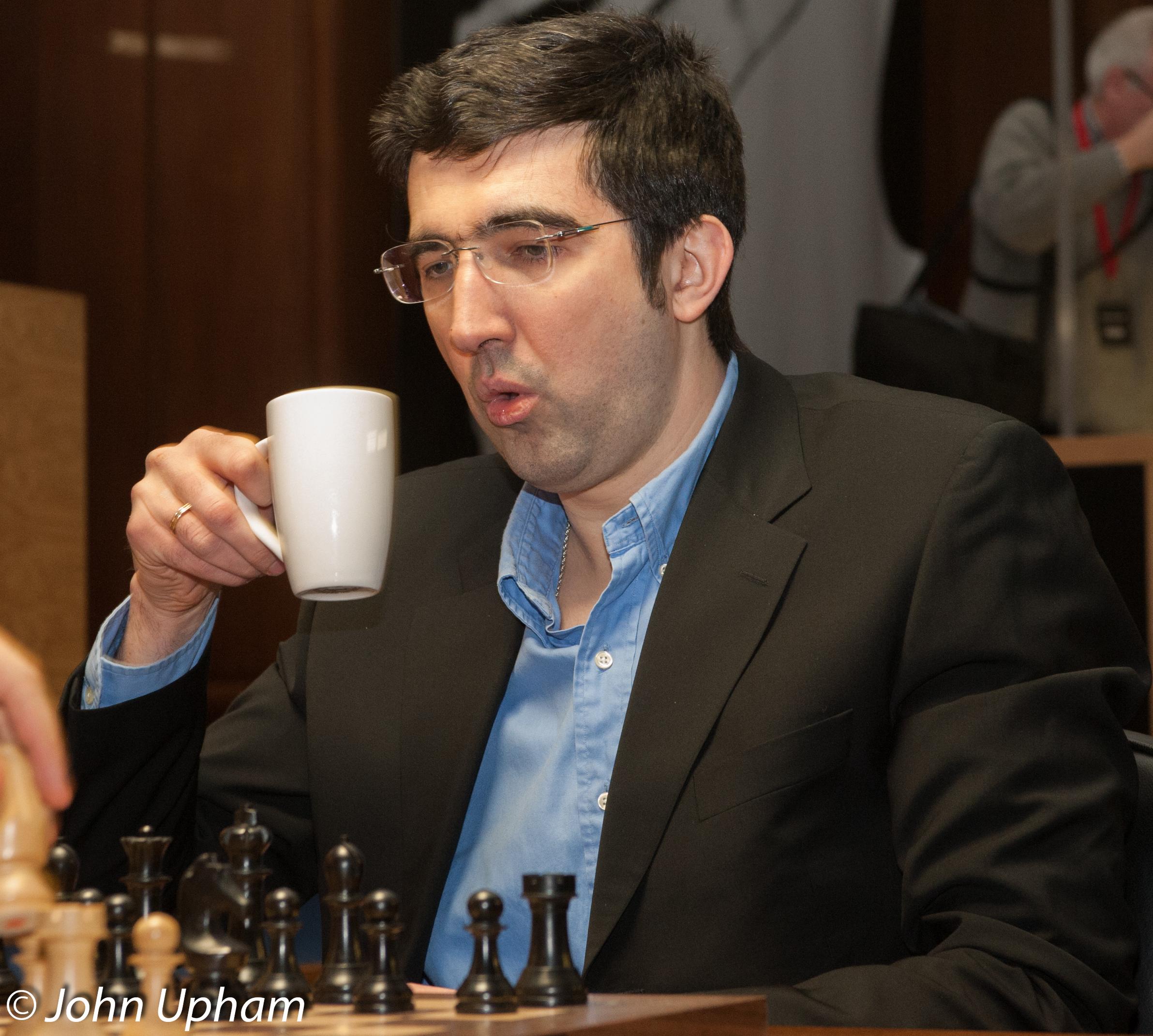
Kramnik’s tournament record during and after his reign was consistently elite. He won Dortmund a record ten times, captured Linares, Wijk aan Zee, and other super-tournaments, and maintained a top-five world ranking for nearly two decades. His style influenced an entire generation: players began studying the Berlin Defense seriously, and “Kramnik-style” solidity became a benchmark. He suffered from rheumatoid arthritis that affected his hands and required treatment, yet he rarely complained and continued to produce high-level chess.
In 2007, at the Mexico City World Championship tournament (a double round-robin of eight top players), Kramnik finished second behind Viswanathan Anand, losing the title after seven years. He challenged Anand again in 2008 in Bonn but lost 6½–4½. Though no longer champion, Kramnik remained a top contender for another decade. He reached the Candidates final in 2013 and 2018, won the 2013 World Rapid Championship, and continued scoring well in elite events. In 2019, at age 43, he announced his retirement from classical chess to focus on rapid, blitz, and coaching, citing health concerns and a desire to explore new challenges. He has since played occasional rapid and blitz tournaments, coached young talents, and worked as a commentator and author.
Off the board, Kramnik is known for his thoughtful, analytical personality. He has written books on his games and opening ideas, and he has been an outspoken advocate for fair play and anti-cheating measures in the modern era. He married in 2013 and has children; the family divides time between Switzerland and Russia. As of 2026, at age 50, Kramnik remains active in chess media, occasionally participates in exhibition events, and continues to influence the game through his deep understanding of its classical roots.
Kramnik’s legacy is that of the quiet revolutionary. He proved that profound positional understanding and iron discipline could overcome even the most dynamic champions. By defeating Kasparov and unifying the titles, he restored stability to the world championship. His revival of the Berlin Defense changed opening theory forever, and his endgame mastery remains a model for students. Modern engines frequently confirm the deep correctness of moves that once looked merely “solid.” From the boy in Tuapse who absorbed Botvinnik’s lessons to the champion who built an impenetrable wall against the greatest attacker of his time, Vladimir Kramnik showed that chess at its highest level rewards not only brilliance but also patience, precision, and unbreakable will.
In the pantheon of champions, Kramnik stands as the master of controlled power—the man who reminded the world that sometimes the strongest move is the one that refuses to lose.