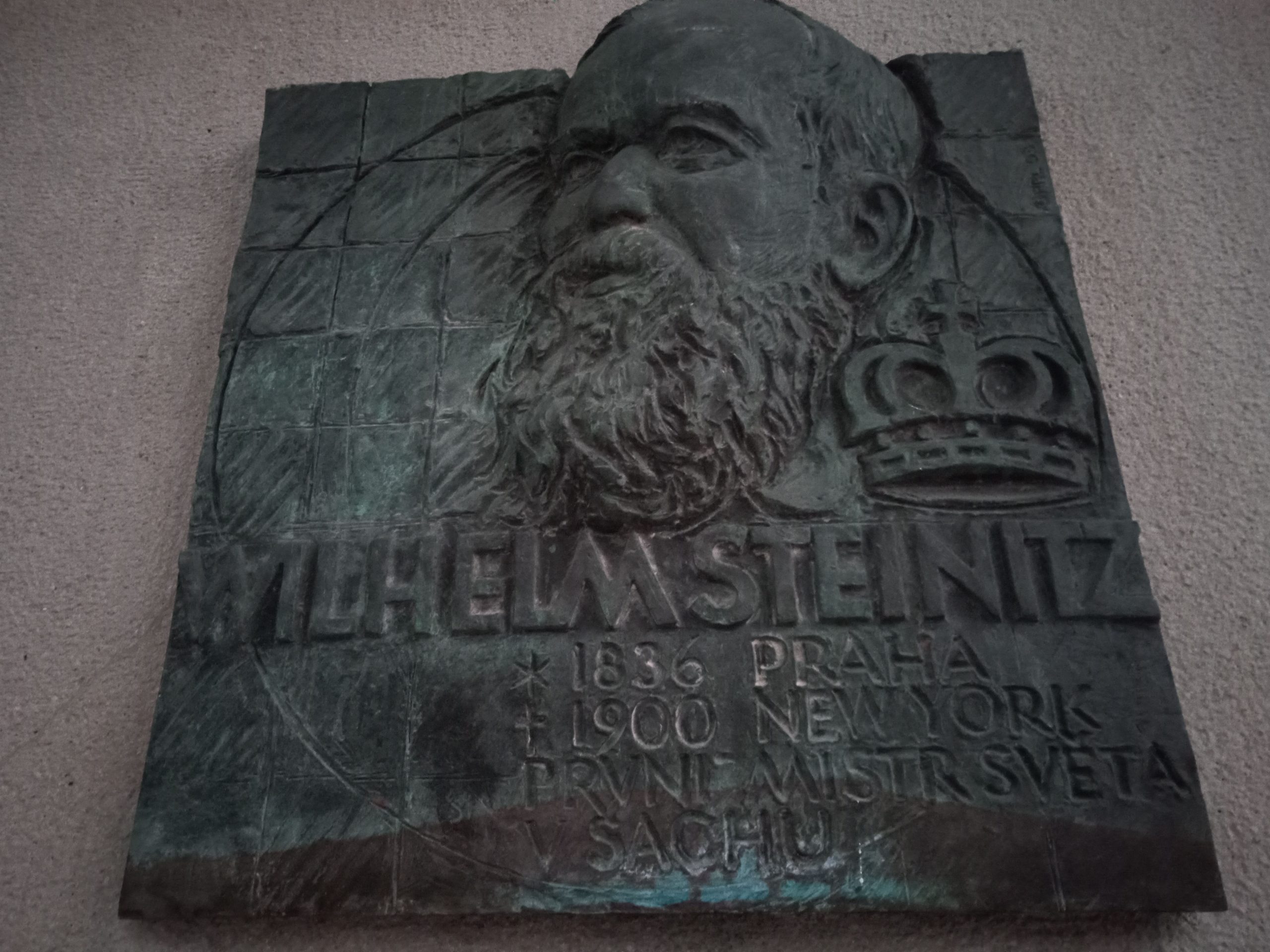
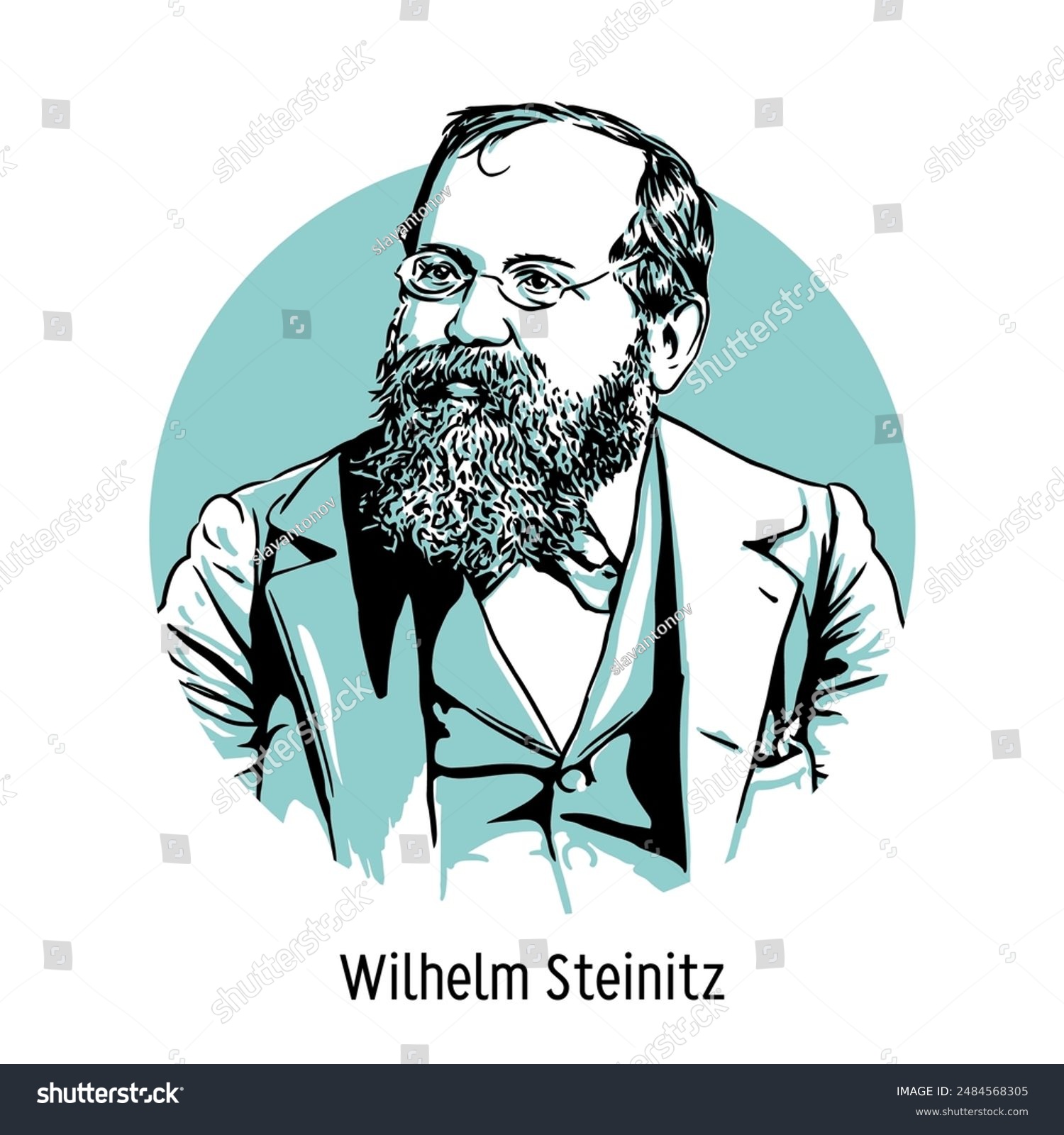
In the dim, gas-lit parlors of 19th-century Europe, where gentlemen in frock coats debated over checkered boards and the Romantic era's swashbuckling sacrifices still ruled the imagination, a quiet revolution was born. Wilhelm Steinitz, born in the Jewish ghetto of Prague on May 14, 1836, would become its architect. He didn't charge into battle with kingside storms or queen sacrifices like the swashbucklers before him. Instead, he built fortresses, probed weaknesses, and proved that chess was not mere art or instinct—it was science. By 1886, at age 50, this former mathematics student had dethroned the last of the romantics and claimed the first official World Championship title. His reign lasted eight years, but his ideas reshaped the game forever. Steinitz wasn't flashy; he was profound. And his story, laced with poverty, exile, brilliance, and eventual tragedy, reads like a grandmaster's epic.
Prague in the 1830s was a city of cobblestones and constraints. Steinitz was the youngest of thirteen children born to Josef-Salomon Steinitz, a tailor, and his first wife. The family lived in the cramped Jewish quarter, where life was modest and Talmudic study was expected. Young Wilhelm learned chess at twelve from a schoolmate, but it was no instant passion. He was a bright boy, drawn to numbers and logic. In 1857, at twenty-one, he left Prague for Vienna to study mathematics at the Polytechnic Institute. Chess, however, soon claimed him. Vienna's cafés buzzed with players, and Steinitz improved with ferocious speed. By 1859, he placed third in the Vienna City Championship. He climbed to second in 1860 and, in 1861, dominated with an astonishing 30 wins out of 31 games. Locals dubbed him "the Austrian Morphy"—a nod to the legendary American attacker Paul Morphy—but Steinitz was already evolving beyond pure aggression.
That same year, 1862, marked his international debut. Austria sent him to the London International Tournament, the era's premier event. He finished sixth out of thirteen with a respectable 8/13 score (draws not counting as full points then). Yet one game shone: his victory over Augustus Mongredien earned the brilliancy prize. The position crackled with tactical fireworks, but Steinitz's play hinted at something deeper—control of the center, patient development. He stayed in London after the tournament, turning professional. Matches followed in rapid succession. He crushed Joseph Henry Blackburne, a rising English star who had only played seriously for two years, by 8-2 with two draws. He demolished Frederick Deacon, Valentine Green, and others with scores that left no doubt: Steinitz was London's new terror.
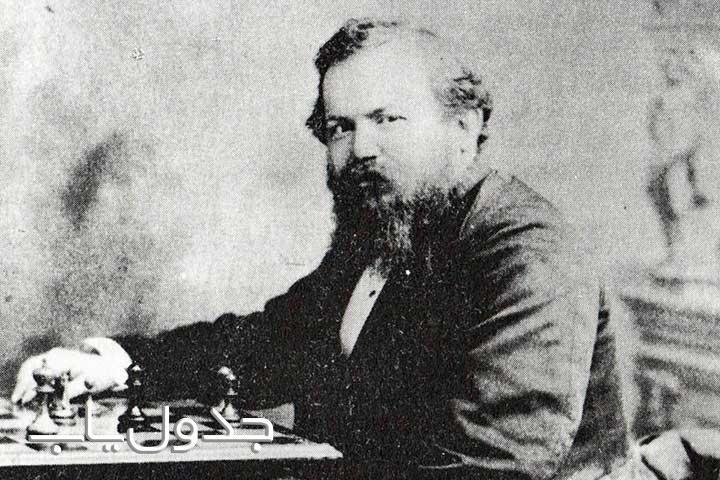
The breakthrough came in 1866. Adolf Anderssen, the unofficial king of chess since Morphy's retirement and winner of the great 1851 and 1862 London tournaments, was widely seen as the world's strongest. Steinitz challenged him in London for £100—a fortune equivalent to tens of thousands today. The match was brutal: no draws counted in the score initially, pure wins. After twelve games, it was deadlocked at 6-6. Then Steinitz won the final two. Final score: 8-6. The chess world gasped. At thirty, Steinitz had toppled the giant. He followed it with a grueling match against Henry Bird (9½-7½) and a strong third place at the 1867 Paris tournament. In Dundee that year, he swept a handicap event and nearly won the main one. By 1870, at Baden-Baden, he took silver behind Anderssen but ahead of legends like Blackburne and Louis Paulsen. Two years later, in London 1872, he finally claimed his first major tournament victory.
Yet 1873 was the pivot point—the moment Steinitz rewrote chess history. At the Vienna tournament, he started shakily but unleashed a 25-game winning streak that stunned observers. He tied for first with Blackburne, then crushed him in the playoff. What changed? Steinitz abandoned the Romantic dogma of "attack at all costs." He preached restraint: develop pieces harmoniously, control the center, accumulate small advantages, and only strike when the position demanded it. In one famous game against Paulsen, he maneuvered quietly, restricting his opponent's knights while building pressure on the queenside. The crowd expected fireworks; instead, they saw a masterclass in prophylaxis. Steinitz called it the "Modern School." Critics mocked him as dull. He didn't care. "Chess is a scientific game," he later wrote, "and the master must study it as a science."
From 1873 to 1882, Steinitz largely vanished from tournaments, focusing on journalism and exhibitions. He wrote columns for The Field in London, analyzing games with surgical precision. He debated rivals in print—the so-called "Ink War" with Johannes Zukertort and Leopold Hoffer in The Chess Monthly. Zukertort, a brilliant attacker and Steinitz's future nemesis, emerged as a rival claimant to supremacy. Steinitz fired back with sharp editorials, defending his positional principles. In 1876, he still found time to thrash Blackburne 7-0 in a one-sided match. But the chess public hungered for proof. Steinitz returned at Vienna 1882, tying for first with Szymon Winawer in a marathon 34-game event. He toured America in 1882-83, winning exhibitions in Philadelphia and New Orleans, and nearly sweeping a match against Celso Golmayo.
The 1883 London tournament was electric. Zukertort dominated with 22/26, but Steinitz's 19/26—third place, three points clear of Blackburne—rekindled the championship debate. By now, Steinitz had moved permanently to New York in 1883. He became an American citizen in 1888, anglicizing his name to William. He launched The International Chess Magazine in 1885, using it as a pulpit for his theories. Negotiations for a title match with Zukertort dragged on amid press wars and egos. Finally, in 1886, the two agreed: first to ten wins, played across New York, St. Louis, and New Orleans. The stakes were explicit—"for the Championship of the World."
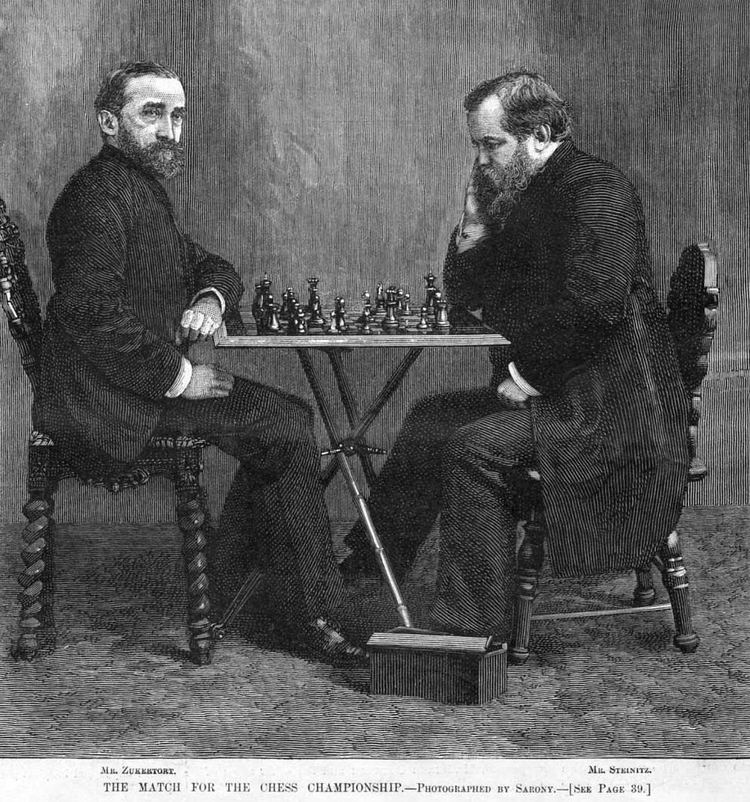
The match was pure drama. Zukertort, the dashing romantic, stormed to a 4-1 lead after five games in New York. Steinitz looked finished. Then the tide turned. In St. Louis, Steinitz clawed back, winning key games with ironclad defense and subtle positional squeezes. By New Orleans, Zukertort collapsed—exhausted, perhaps psychologically broken. Steinitz won the final stretch, taking the match 10-5 with five draws on March 29, 1886. At fifty, the ghetto boy from Prague was the first official World Champion. The New York Times hailed it as a triumph of "the new school over the old."
Steinitz defended his title fiercely. In 1889, sponsored by Havana's chess club, he beat Mikhail Chigorin 10½-6½ in a match that tested his endgame mastery. The 1889 New York tournament was designed to groom a successor; Chigorin and Max Weiss tied for first, but Isidor Gunsberg emerged as challenger. Steinitz crushed him in New York 1890: 10½-8½. A 1891-92 rematch with Chigorin in Havana was closer—Steinitz won 12½-10½ amid sweltering heat and passionate crowds. Siegbert Tarrasch, Germany's rising star, declined a challenge due to his medical practice. Steinitz talked of retirement, but Emanuel Lasker, a brilliant young mathematician twenty years his junior, issued a formal challenge.
The 1894 match, spread across New York, Philadelphia, and Montreal, was historic for its age gap—thirty-two years. Stakes were high: $2,000 each after haggling. Lasker won the first game; Steinitz equalized. The score seesawed until Lasker pulled ahead decisively, winning 10-5 with four draws. Steinitz's experimental openings and fatigue played roles, but the torch had passed. At fifty-eight, the champion was dethroned.
Defeat did not break him immediately. He won New York 1894 convincingly and took fifth at Hastings 1895, where his immortal game against Curt von Bardeleben produced one of chess's most famous combinations: a rook sacrifice on e7, followed by a king hunt that ended in resignation amid cheers. But shadows lengthened. Steinitz's health faltered—rheumatism, heart issues, and mental strain from decades of poverty and obsession. In 1897, at the Moscow tournament, paranoia set in; he believed he could give God pawn and move odds and win. Hospitalized briefly, he recovered enough to return to New York. His final years were spent in modest rooms, editing, analyzing, and playing occasional games. On August 12, 1900, at age sixty-four, Wilhelm Steinitz died penniless on Wards Island, a charity ward in New York Harbor. The chess world mourned a giant.
Steinitz's legacy towers. He won every serious match from 1862 to 1892—an undefeated streak spanning thirty years. He authored The Modern Chess Instructor (1889), codifying principles still taught today: the importance of the center, pawn structure, piece coordination, and the "theory of balance." He influenced Lasker, Capablanca, and every champion since. Garry Kasparov later called him "the first chess scientist." In an era of flamboyant attacks, Steinitz proved that quiet moves could conquer kings. His life—from Prague tailor’s son to American citizen, from romantic attacker to positional prophet—embodied chess's evolution.
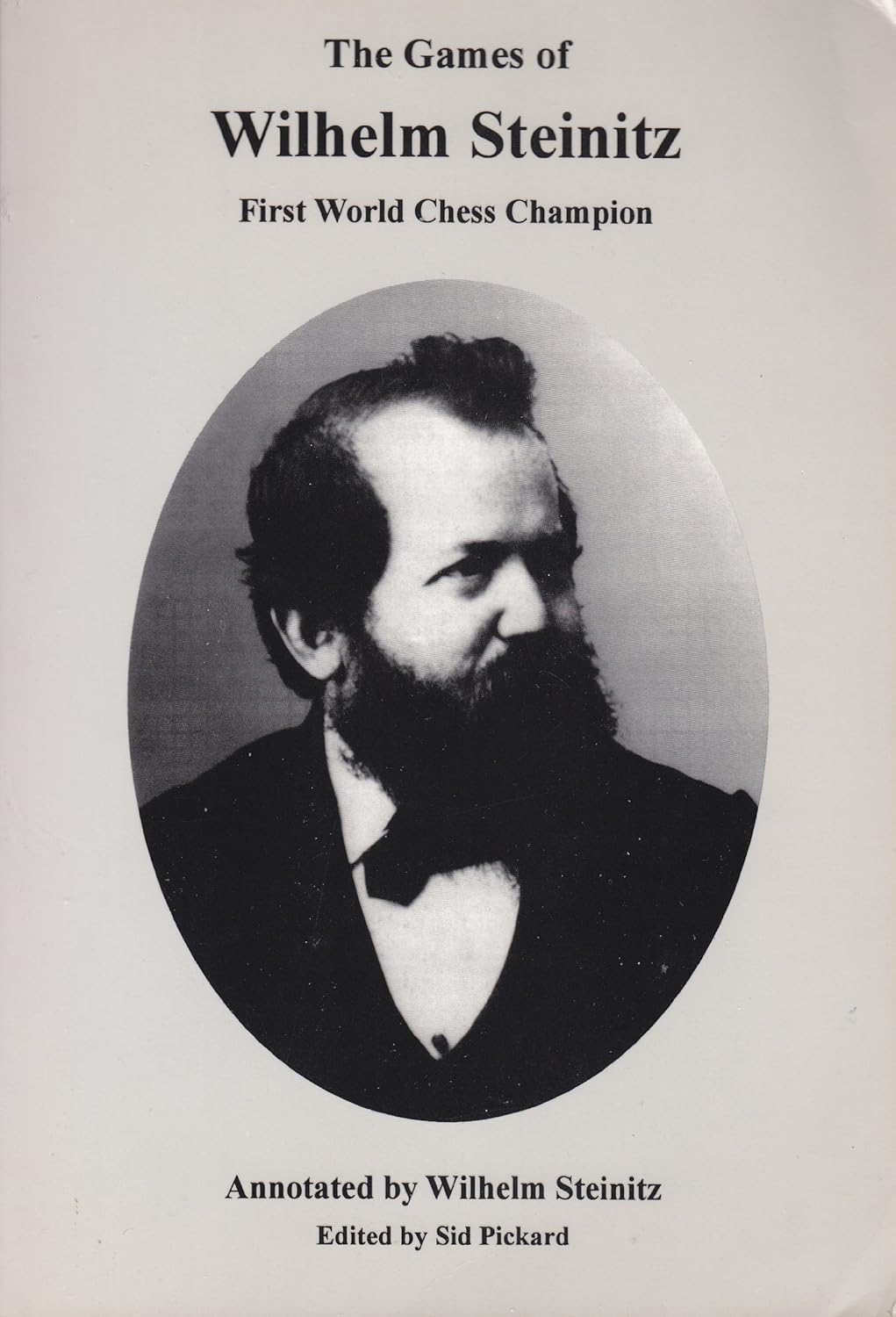
Today, when grandmasters debate "Steinitzian" maneuvers or engines validate his 140-year-old ideas, one truth endures: without Wilhelm Steinitz, modern chess would not exist. He didn't just win games. He taught the world how to think.