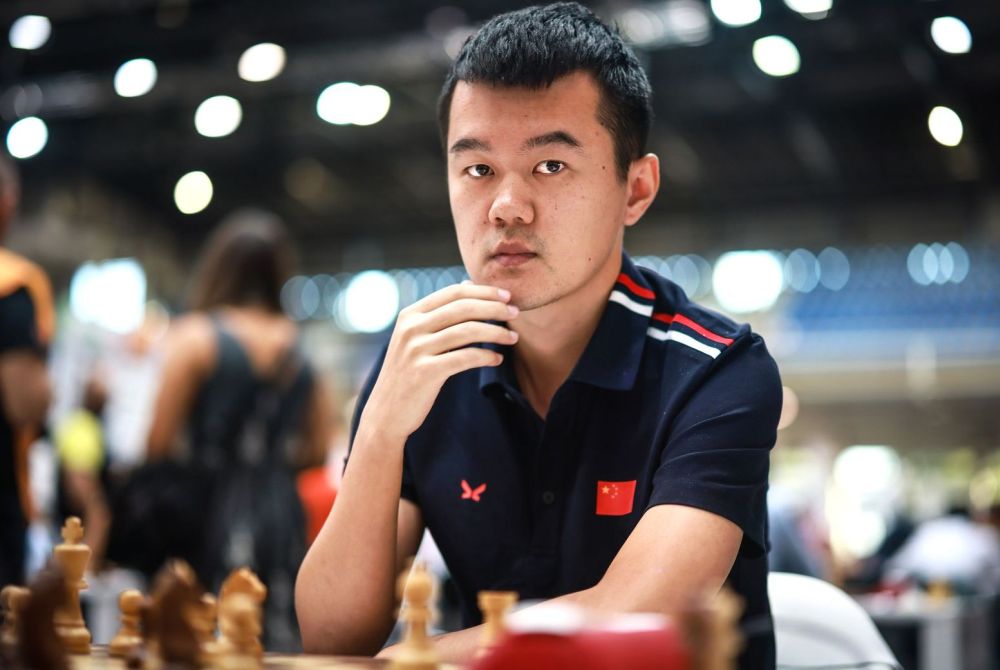
In the bustling coastal city of Wenzhou, Zhejiang Province, China, on October 24, 1992, a boy named Ding Liren entered the world. Wenzhou had already earned a reputation as a cradle of chess talent, nurturing stars like women's world champion Zhu Chen. Ding's introduction to the royal game came early, at just four years old, guided by his mother and enthusiastic family friends who saw potential in several local children. What started as playful lessons soon revealed a prodigious mind capable of deep concentration and strategic foresight. Unlike many chess stories filled with dramatic early triumphs, Ding's path was one of steady, determined growth, marked by quiet persistence that would later define his entire career.
By the time he was a young boy attending school, Ding was already competing in junior events with remarkable composure. He claimed the Chinese under-10 championship in 2003 and followed it with strong showings in international youth competitions, securing second places at the FIDE World Youth Chess Championships in the boys' under-10 and under-12 categories. At nine, he won the Chinese Youth Chess Championship, prompting his parents to ask a pivotal question: did he want to pursue chess seriously? Ding's reply was simple yet profound—he did not merely want to play; he aspired to stand at the very top. This inner ambition fueled countless hours of training during school breaks, including repeated participation in the demanding Li Chengzhi Cup, where he consistently dominated his age groups through sheer calculation and resilience.
The breakthrough that announced Ding to the chess world arrived in 2009, when he was just 16. Entering the Chinese Chess Championship as one of the lower-rated competitors, he navigated the tournament undefeated, even against seasoned grandmasters. A fortunate yet symbolic moment came when an opponent forfeited due to arriving late under FIDE's strict zero-tolerance policy. That victory clinched the national title, making Ding the youngest Chinese champion in history and simultaneously earning him the Grandmaster title, officially awarded later that year just before his 17th birthday. He would go on to win the national championship again in 2011 and 2012, cementing his status as China's premier male player and a symbol of the nation's rising chess ambitions.
Ding's international presence grew steadily throughout the 2010s. He became a cornerstone of the Chinese national team, representing his country at Chess Olympiads starting in 2012. His contributions helped secure team gold medals in 2014 and 2018, with Ding earning an individual bronze in 2014 and upgrading to individual gold in 2018. At the World Team Championships in 2015, China claimed team gold while Ding took individual silver. These team successes highlighted not just his personal skill but his reliability as a teammate, often delivering crucial points in high-pressure situations. Observers began noting his exceptional endgame technique—a calm, precise ability to squeeze advantages from seemingly equal positions.
Rating milestones followed rapidly. Ding entered the FIDE top 100 in 2012 and surged into the top 10 by 2015 with a rating hovering around 2770. He became the first Chinese player to cross the elite 2800 barrier, peaking at an impressive 2816, which placed him among the highest-rated players in chess history. This achievement opened doors to the world's most prestigious events. In 2017, he reached the final of the FIDE World Cup, qualifying as the first Chinese player for the Candidates Tournament. Though he placed fourth in the 2018 Candidates, narrowly missing a shot at Magnus Carlsen, the experience honed his competitive edge.
Perhaps the most striking testament to Ding's defensive mastery was his extraordinary unbeaten streak in classical chess. From August 2017 to November 2018, he went 100 games without a single loss—29 wins and 71 draws. This run stood as the longest in modern elite chess until Carlsen later surpassed it. Commentators marveled at his ability to absorb pressure, find hidden resources in inferior positions, and grind out draws or wins through superior calculation and patience. Ding's style was never flashy; it was solid, creative in counterplay, and underpinned by an iron will. He excelled in elite tournaments, winning the 2019 Grand Chess Tour overall by defeating Maxime Vachier-Lagrave in the finals and claiming the 2019 Sinquefield Cup with a memorable victory over Carlsen himself. These wins against the absolute best confirmed his place among the world's elite contenders.
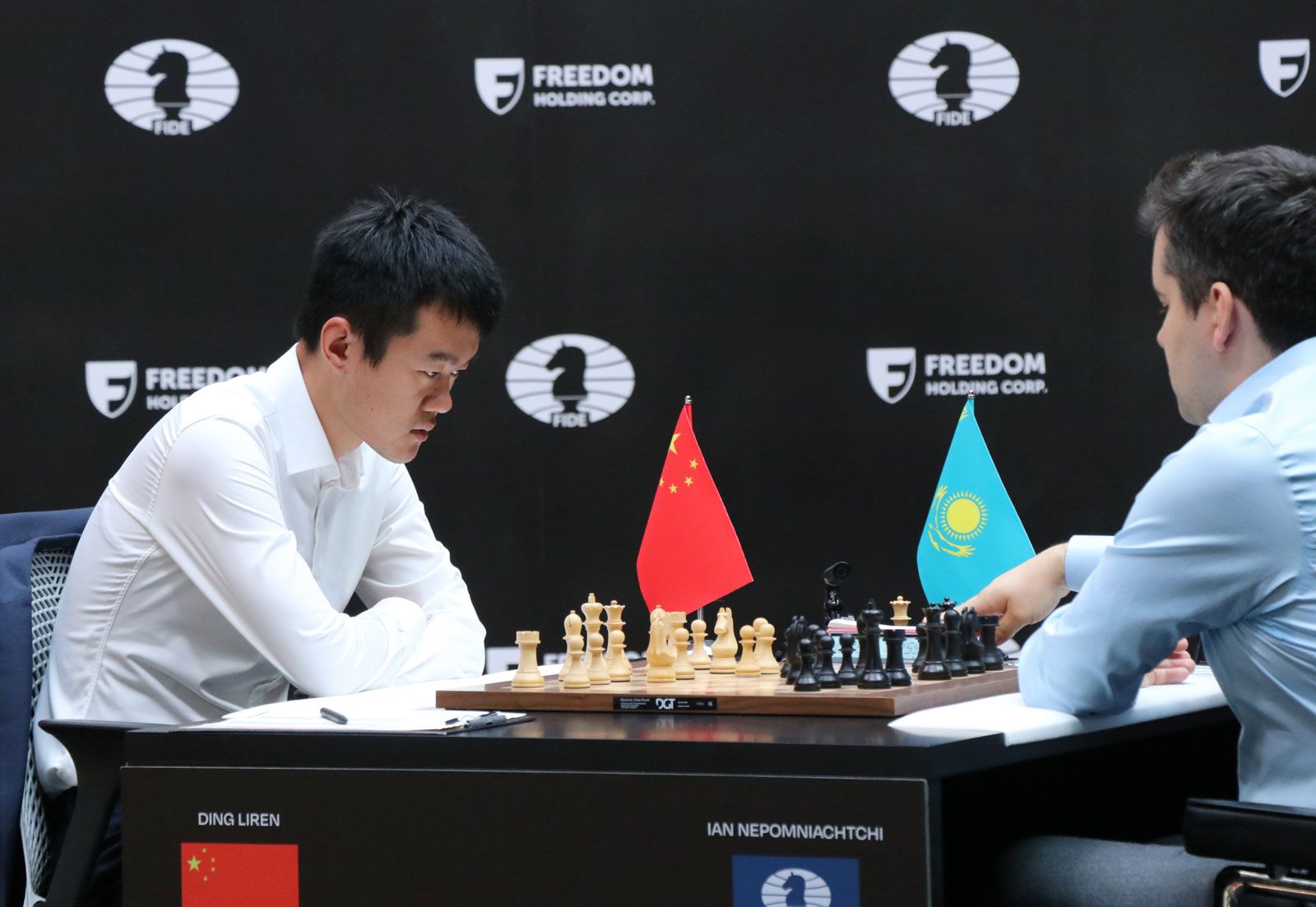
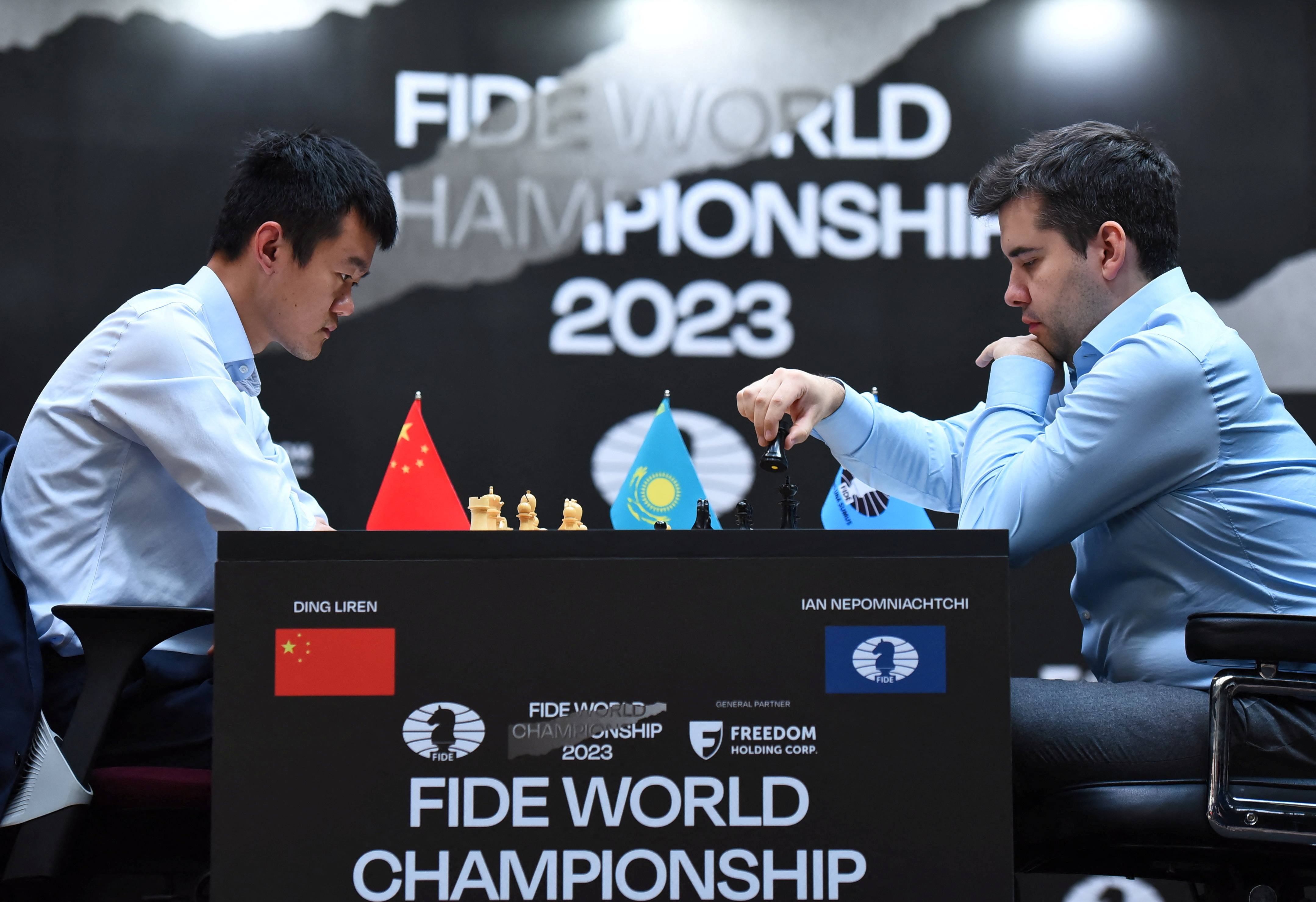
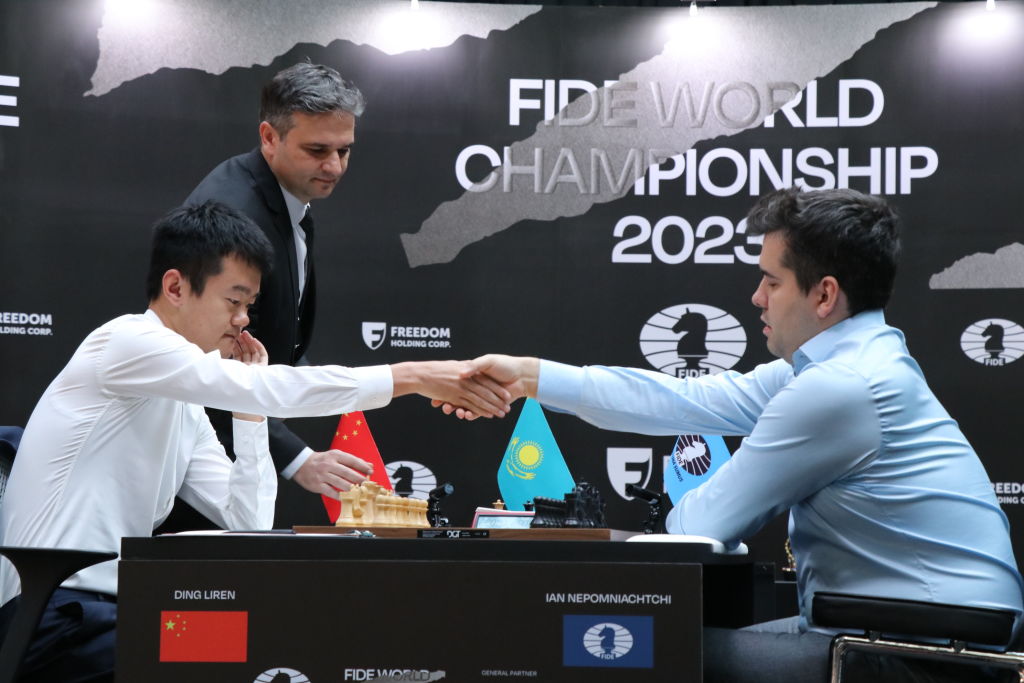
The journey to the world championship crown tested every ounce of Ding's resilience. After Carlsen declined to defend his title following the 2021 match, the 2022 Candidates Tournament in Madrid determined the challenger. Ding finished second behind Ian Nepomniachtchi, earning his place in the 2023 World Chess Championship in Astana, Kazakhstan. The classical portion of the match against Nepomniachtchi was a grueling battle of nerves. Over 14 games, the score remained deadlocked at 7-7, with each player winning three games and drawing eight. Ding repeatedly demonstrated come-from-behind fighting spirit, recovering from deficits with precise defense and timely aggression.
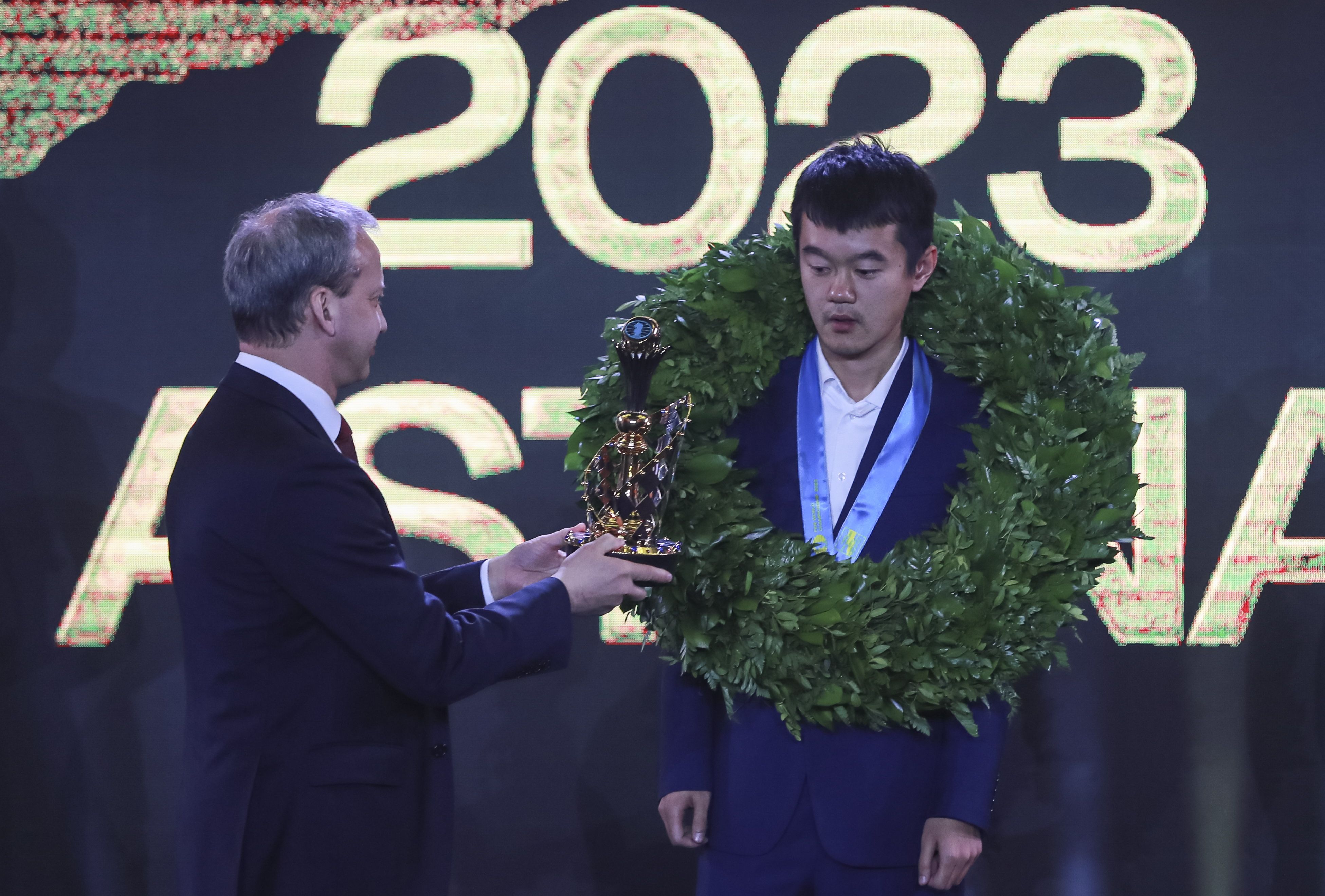
The tiebreaks shifted to rapid chess, where the tension reached its peak. After three hard-fought draws, the fourth and decisive game saw Ding playing with the black pieces. In a complex endgame, Nepomniachtchi faltered under time pressure. Ding capitalized with accurate pawn advances and queen maneuvers, converting a slight edge into a full point. With a final rapid score of 2½–1½, Ding Liren emerged victorious on April 30, 2023, becoming the 17th undisputed World Chess Champion—and the first from China in the open category. This historic moment sent waves of pride across China, inspiring a new generation in the world's most populous nation and marking the culmination of decades of systematic chess development.
As champion from 2023 to 2024, Ding faced not only formidable opponents but also profound personal challenges. Mental health struggles and depression led to a nine-month hiatus from competitive chess in 2024. During this period, he stepped away to focus on recovery, speaking candidly about the immense pressure of the title and the toll it took. He returned selectively, participating in events like the Tata Steel Chess Tournament and the Chess Olympiad, where his presence continued to bolster China's strong performances. Despite a dip in form—he had gone 304 days without a classical win before the 2024 title defense—Ding's underlying depth and experience remained evident.
The defense of his crown came in late 2024 against the rising Indian star Gukesh Dommaraju in Singapore. The best-of-14 classical match, held from November 25 to December 12, was intensely competitive with a significant prize fund. Ding started strongly, winning Game 1 with black. Gukesh struck back in Game 3, and a series of seven tense draws followed. Gukesh took the lead with a victory in Game 11, but Ding responded in Game 12 with what many called a near-perfect performance, including a dramatic rook sacrifice to level the score at 6-6. Game 13 ended in another draw, setting the stage for a decisive Game 14 with Ding holding white.
The final game appeared headed toward a peaceful draw until a critical moment on move 55. In a rook-and-pawn endgame, Ding's rook maneuver to f2 proved a costly blunder, allowing Gukesh to exploit the error with precise play. Exchanges followed, leaving Gukesh with a winning advantage through pawn promotion threats. Ding resigned, and the match concluded 7.5–6.5 in Gukesh's favor. At 18 years and 195 days, the challenger became the youngest undisputed world champion in history. Though Ding lost the title, his performance in the match—particularly the brilliant Game 12 comeback—underscored his enduring class.

Ding Liren's legacy extends far beyond any single result. As China's pioneering world champion, he elevated the global profile of Chinese chess, proving that disciplined training, deep middlegame understanding, and unbreakable defensive tenacity could challenge traditional powerhouses. His career boasts multiple national titles, Olympiad golds, super-tournament victories, and a world crown secured through sheer determination in tiebreaks. Off the board, Ding remains modest and soft-spoken, qualities that have endeared him to fans worldwide. Even after stepping back following the 2024 match and being listed as inactive in classical ratings for a period, he has shown signs of gradual return in team events, continuing to contribute to the game he has enriched for over two decades.
Ding's story is one of quiet strength amid towering expectations. From a four-year-old discovering chess in Wenzhou to standing atop the chess world in Astana, he embodied resilience—not through loud proclamations, but through consistent, calculated excellence. His reign, though brief, opened new horizons for Asian chess and reminded the world that true champions are forged not just by talent, but by the ability to endure and rise again. As he continues his journey, Ding Liren remains a beacon of perseverance in the royal game. (Word count: 1998)
Gukesh Dommaraju: The Prodigy Who Redefined Possibility
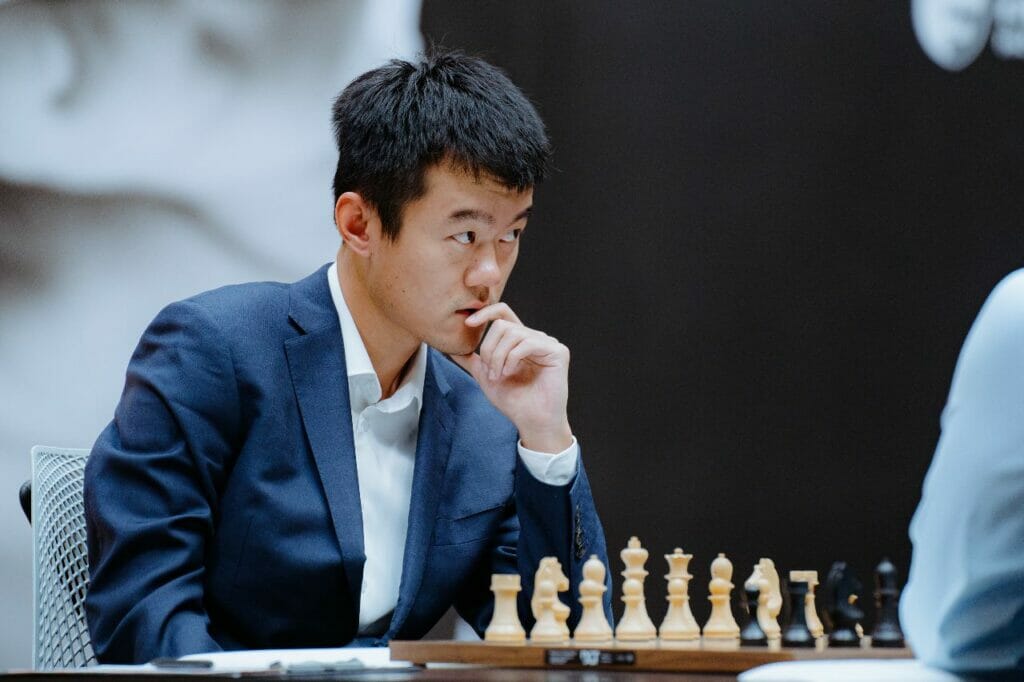
On May 29, 2006, in the vibrant chess hub of Chennai, India—home to legendary former world champion Viswanathan Anand—a boy named Gukesh Dommaraju was born into a family of medical professionals who placed great emphasis on education and discipline. Chess entered his life relatively late, at age seven, through casual classes at his school, Velammal Vidyalaya. What began as an extracurricular activity three times a week quickly transformed into an all-consuming passion. Despite starting later than many celebrated prodigies, Gukesh displayed an extraordinary combination of focus, work ethic, and intuitive grasp of the game's complexities. His parents supported his pursuit while ensuring balance, but the young boy's dedication soon set him on an unprecedented trajectory.
Early recognition came swiftly. In 2015, Gukesh earned candidate master status by winning the under-nine category at the Asian School Chess Championships. By 2017, he had achieved the International Master title. His ascent to the Grandmaster rank was nothing short of meteoric. On January 15, 2019, at the astonishing age of 12 years, 7 months, and 17 days, he secured his final GM norm at the Delhi International Grandmaster Open. This made him the third-youngest grandmaster in history, missing Sergey Karjakin's record by a mere 17 days. In a remarkable display of stamina, the young talent played an incredible 276 games across 30 tournaments in 13 countries within just 16 months, showcasing not only raw ability but an uncommon maturity and hunger for improvement.
Gukesh shattered age barriers with relentless consistency. He became the youngest player to surpass 2700 Elo at 16 and the youngest to breach 2750 in August 2023 at 17. By 2023, he had overtaken Anand as India's highest-rated player, ending a 37-year dominance. His playing style blended aggressive middlegame creativity with precise, engine-like calculation and a composure far beyond his years. Mentored indirectly by Anand, whom he respectfully called "Vishy Sir," Gukesh harbored a bold dream from childhood: to become the youngest world champion. This ambition drove him through rigorous preparation, including a conscious early decision to minimize reliance on chess engines in favor of developing his own instincts and deep calculation skills.

Junior successes laid a strong foundation. Gukesh won the Under-12 title at the World Youth Chess Championships and dominated numerous Asian and national events. His seamless transition to senior competition saw him excel in open tournaments, building the rating and experience needed for elite cycles. In 2024, at just 17, he qualified for the FIDE Candidates Tournament in Toronto—the youngest participant ever in that grueling event. Facing a powerhouse field that included Hikaru Nakamura, Fabiano Caruana, and Ian Nepomniachtchi, Gukesh delivered a stunning performance, scoring 9/14 to win the tournament outright. This victory made him the youngest-ever Candidates winner and earned him the right to challenge reigning champion Ding Liren for the world title.
The 2024 FIDE World Chess Championship unfolded in Singapore from November 25 to December 12, a best-of-14 classical games contest with a $2.5 million prize fund. Entering as the higher-rated player (around 2783 versus Ding's 2728), Gukesh faced a resilient defender who had overcome personal challenges to reach the match. The encounter was a true rollercoaster of emotions and high-level chess. Ding drew first blood by winning Game 1 with black, leveraging his experience. Gukesh equalized dramatically in Game 3. What followed was a marathon of seven consecutive draws, many of them tense battles filled with near-misses and profound strategic depth on both sides.
The match intensified as Gukesh seized the lead with a convincing win in Game 11, playing with white in just 29 moves and putting himself in a strong position to clinch the title. However, Ding refused to yield. In Game 12, the defending champion produced what analysts hailed as a near-flawless masterpiece, featuring a brilliant rook sacrifice that leveled the score at 6-6 and injected fresh drama into the contest. Game 13 ended peacefully, setting up a winner-takes-all Game 14 with Ding holding the white pieces.
The decisive game began with cautious maneuvering, appearing destined for a draw that would force rapid tiebreaks. Then, on move 55 in a rook-and-pawn endgame, Ding committed a critical error by maneuvering his rook to f2. Gukesh, ever alert, pounced immediately. With clinical precision, he forced favorable exchanges, creating unstoppable pawn promotion threats. Ding, recognizing the inevitability, resigned shortly afterward. The final score stood at 7.5–6.5 in Gukesh's favor. At 18 years and 195 days old, Gukesh Dommaraju became the youngest undisputed classical world champion in history, surpassing Garry Kasparov's previous record (set at age 22 in 1985) by a staggering margin. He also joined Anand as only the second Indian to claim the open world title.
2024 proved to be a fairy-tale year for the young champion. In addition to the Candidates triumph and world title, Gukesh tied for first at the prestigious Tata Steel Chess Tournament and led India to its maiden Chess Olympiad gold medal in Budapest. On board one, he scored an outstanding 9/10, earning individual gold and demonstrating leadership that inspired his teammates. These accomplishments highlighted his versatility and consistency at the absolute pinnacle. In January 2025, India honored him with the Major Dhyan Chand Khel Ratna, the nation's highest sporting award, recognizing his transformative impact.
Gukesh's meteoric rise mirrors and accelerates India's chess renaissance, built upon Anand's foundational legacy and widespread scholastic programs that have democratized access to the game. His calm demeanor at the board, combined with rigorous modern training methods, has drawn favorable comparisons to the greatest champions. Off the board, he maintains perspective, continuing his education alongside chess pursuits and emphasizing balance in life. As the reigning champion since December 2024, Gukesh represents the dawn of a new era—younger, more globally connected, and propelled by prodigious talent refined through dedication.
From a seven-year-old discovering chess in a Chennai school to becoming the 18th undisputed world champion at 18, Gukesh's journey illustrates that extraordinary achievement stems from passion, opportunity, and unwavering focus. His peak ranking has climbed toward the world elite, and he continues competing in super-tournaments, preparing to defend his crown while inspiring millions. Age proved no barrier when talent met relentless preparation. Gukesh Dommaraju has not merely broken records; he has rewritten the narrative of what is possible in chess, opening exciting new chapters for Indian and Asian dominance in the world's most intellectual sport. His story continues to unfold, promising further brilliance from a champion whose best years may still lie ahead.
